

Stargazing in Ireland offers a truly world-class experience, with some of the best dark Sky Reserves in Europe, and a breathtaking front-row seat to constellations, planets, and the sweeping arc of the Milky Way. On the right night, you can even witness the northern lights in Ireland! It truly offers a sky-watching experience like no other, making it one of Europe’s best Astro tourism destinations.
With vast rural landscapes, low light pollution, and three officially recognised International Dark Sky Reserves, Ireland is emerging as a global hotspot for noctourism in 2026, a rising travel trend focused on stargazing, astronomy, and nighttime nature.
Living in Ireland, clear winter nights are something special. When the Atlantic wind sweeps the clouds east, leaving the sky scrubbed clean, we always step outside and lose ourselves in the stars, planets, and the faint sweep of the Milky Way. No telescope. Just our eyes and an endless sky.
In this guide, we’ll tell you about the three officially designated Dark Sky Reserves in Ireland, what stars and planets you can spot with the naked eye, and everything you need to know to make the most of your stargazing in Ireland adventure.
For more off-the-beaten-path stargazing experiences, check out our guide to the Best Hidden Dark Sky Parks in Europe.
“The Irish sky on a clear night isn’t just beautiful. It’s a reminder that we live on a very small rock in a very large universe.”
World Class Stargazing in Ireland
Stargazing in Ireland is one of the best experiences in the world for Astro tourism. That might surprise people who associate Ireland with rain and cloud, and yes, Irish weather can be very frustrating. But when the skies do clear, what you see overhead is genuinely world-class.
To understand why stargazing in Ireland is some of the best in the world, you need to understand the Bortle scale: The nine-point measure of night sky darkness that astronomers use worldwide.
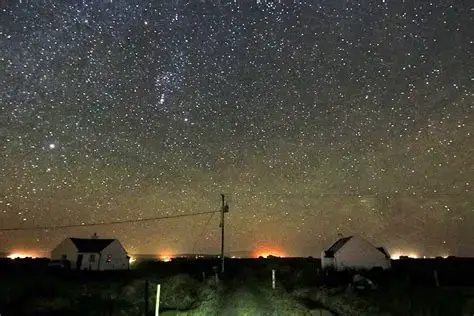
A Bortle 9 sky is the orange glow above a city centre. A Bortle 1 is a sky so dark that you can see your own shadow cast by the Milky Way alone. For context, most of Dublin sits at Bortle 9 year-round, and most Irish rural areas, on a good night, hover between Bortle 4 or 5.
The designated Dark Sky Reserves in Ireland sit at Bortle 2 and 3, which places them
among the best stargazing sites in Europe, where you feel you could reach up and drag a constellation down by hand.
This is because Ireland sits on the western edge of Europe, with nothing between it and North America but the open Atlantic Ocean. The west in particular — Kerry, Mayo, Galway, Donegal- has light pollution levels that most of mainland Europe can only dream of.
True Bortle 1 skies are so rare that the world’s greatest observatories are built specifically there. Places such as the Atacama Desert in Chile (considered the darkest place on earth), the Mongolian steppe, and the Australian Outback. So when Ireland’s Dark Sky Reserves clock in at Bortle 2–3, that is genuinely remarkable.
Dark Sky Reserves in Ireland
Three sites are now official International Dark Sky Reserves in Ireland, making it one of only a handful of countries in Europe with such protected darkness. So let’s find out why they are the best places for stargazing in Ireland.
1. Kerry International Dark Sky Reserve – A Cosmic Coastal Playground
Kerry International Dark Sky Reserve was launched in 2014 as the first Gold-tier Reserve in the entire Northern Hemisphere and the first of its kind in Europe. This 700 square kilometre expanse along the Iveragh Peninsula set the benchmark for what a protected dark sky destination should look like.
Bordered by the MacGillycuddy’s Reeks (just outside Killarney) to the north and the Atlantic Ocean to the south and west, Kerry International Dark Sky Reserve sits in a natural bowl of darkness because the mountains block the light from inland.
The scenery is one of the most dramatic landscapes in Ireland during the day and the perfect place for stargazing in Ireland at night
The Kerry International Dark Sky Reserve takes protecting its night skies seriously. In towns like Ballinskelligs, Portmagee, and Valentia Island, streetlights have been upgraded to dark-sky-friendly designs that direct light downward instead of up into the sky.
“It’s special here. Every time, when the sun goes down, you get a whole new perspective.” — Steve Lynott, Kerry Dark Skies Tourism.

Kerry International Dark Sky Reserve Top Viewing Spots
Here are some of our favourite spots for stargazing in Ireland’s Kerry Dark Sky Reserves. As long as you find a dark spot, you’ll be rewarded with incredible views of the night sky.
- Bray Head (Valentia Island, not Wicklow!): One of the most famous stargazing spots in Ireland. You get a high coastal viewpoint over the Atlantic, with minimal light pollution and often clear southern skies. On good nights, you can see the Milky Way arching over the Skellig Islands area.
- Coomanaspic Pass: one of the darkest locations in the Kerry International Dark Sky Reserve, with 360° sky visibility. This is a favourite spot for astrophotography. You can watch constellations rise in the east and set in the west over the course of a single session.
- St. Finian’s Bay: Quieter and slightly more sheltered. Accessible, dramatic, and just remote enough to feel like a genuine discovery. Also close to Portmagee and Waterville.
- Derrynane Beach (Caherdaniel): A classic “sit on the beach and look up” spot. Wide horizon over the Atlantic, very low local light, and easy access parking nearby. a short drive from accommodation options in Waterville.
Insider Tips from Locals
“It’s special here. Every time, when the sun goes down, you get a whole new perspective.” — Steve Lynott, Kerry Dark Skies Tourism.
Where to Stay When Visiting Kerry International Dark Sky Reserve
Accommodations range from hostels to boutique hotels:
- Butler Arms Hotel, Waterville: This luxury hotel in Ireland is located just steps from Waterville Beach, a 4-minute drive from Waterville Golf Links, and approximately 7.5 miles (12 km) from Derrynane Bay Beach for stargazing at nighttime.
- The Royal Valentia Hotel: An authentic Irish stay that feels straight out of a film, set on a stunning island where dramatic landscapes meet warm, friendly locals. Just 20 minutes from Portmagee for world-class stargazing in Ireland.
- Seagull Cottage B&B: Located just outside Portmagee, the most budget-friendly option and tends to book up quickly, so reserve as soon as your dates are fixed. It’s about 15 minutes from both Bray Head and St. Finian’s Bay.
Kerry International Dark Sky Reserve Events & Experiences
The annual Skellig Coast Dark Sky Festival is one of the best stargazing events in Ireland, bringing together star-walks, astrophotography, folklore, and Irish-language talks.
From October to December, Kerry AquaTerra runs a Winter Stargazing Cruise out of Valentia Island — a 1.5-hour journey with blankets, hot drinks, and the Atlantic sky overhead.
How to Get to Kerry International Dark Sky Reserve
Public Transport: Killarney and Tralee are the main transport hubs if you are coming by bus or train. Bus Éireann routes 279 and 280 connect to Cahersiveen and Portmagee – the heart of the Dark Sky Reserve
Once in Cahersiveen or Portmagee, a short taxi ride (5–20 mins) can take you to accommodations or viewing points in Dark Sky Towns such as Ballinskelligs, Valentia Island, Waterville and Dromid.
However, renting a car is usually the best way to explore Ireland if you do not live here, especially when you’re heading to remote dark sky areas. We find the best car rental deals in Ireland with DiscoverCars.
Planning a trip around the Ring of Kerry? Click the photo below to find the perfect way to experience this iconic road trip in Ireland.
2. Mayo Dark Sky Park (Wild Nephin NP) – Ireland’s Aurora Frontier
If Kerry is Ireland’s gold-tier showpiece, Mayo’s Wild Nephin Dark Sky Park is its wild heart. Part of Wild Nephin National Park and 150 square kilometres of blanket bog, glacial lakes, and near-total silence — this was Ireland’s first official Dark Sky Park, earning its Gold-tier status in 2016 and one of the best places for stargazing in Ireland.
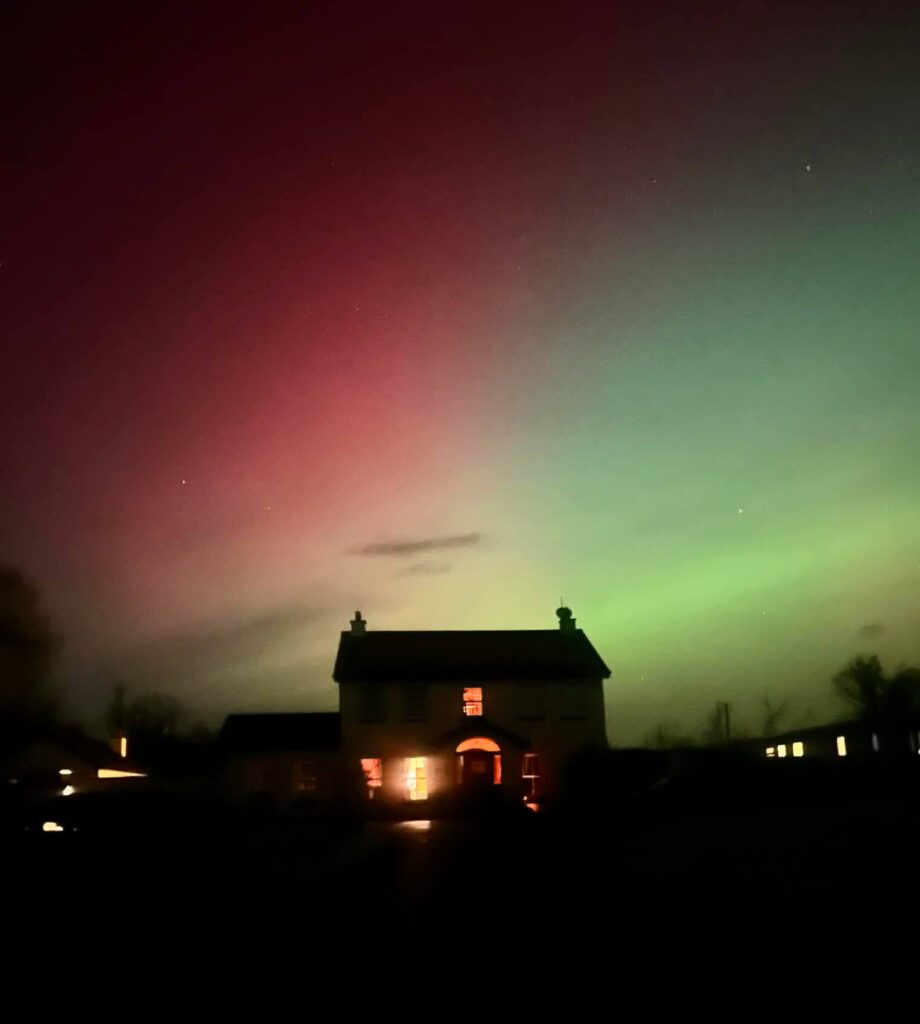
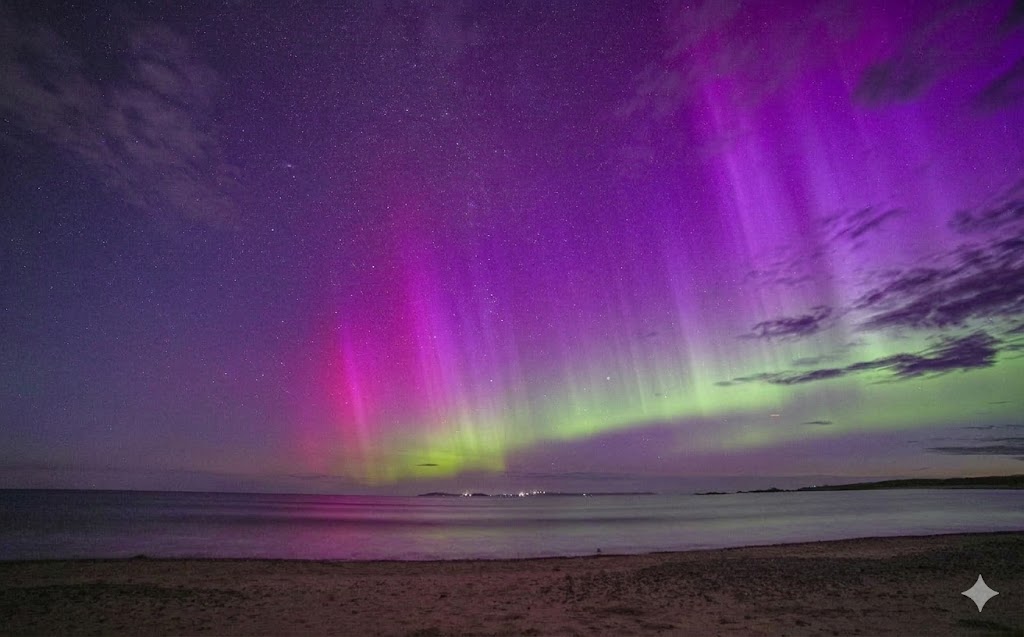
Mayo is also where we need to talk about the Northern Lights in Ireland. The northern horizon here is almost completely unobstructed, and the latitude sits just high enough that during periods of strong solar activity, the aurora borealis can put on a show that rivals anything you’d see in southern Scandinavia.
During the major solar storm of May 2024, the Northern Lights in Ireland were visible as far south as Cork and Clare. We know this from standing in our own gardens and watching the sky turn from deep green to red and back again. It was one of those nights that recalibrates your sense of what this country is capable of showing you.
It is not a guaranteed spectacle, nothing in Irish weather ever is, but Wild Nephin is your best chance of seeing the Northern Lights in Ireland without leaving the island.
Northern Lights in Ireland Insider Moment
The green and red of Mayo literally lit up the sky.” — Georgia MacMillan, Mayo Dark Sky Development Officer, recalling a major Aurora event on 10 May 2024
Mayo Dark Sky Park Top Viewing Spots
On the right night, standing at the Letterkeen Trailhead with a clear northern horizon ahead of you, stargazing in Ireland feels less like a leisure activity and more like a confrontation with the infinite.
- Brogan Carroll Bothy: Starting from the same point as Letterkeen Trailhead, this remote stone bothy sits on the eastern edge of Wild Nephin National Park, about 13 km from Newport and accessible by car. Built as a sheltered overnight viewing spot, it’s the park’s darkest easy-to-reach location.
- Claggan Mountain Boardwalk: Situated between Mulranny and Ballycroy, this coastal boardwalk trail (~2 km) offers evening strolls under pristine Irish skies with unobstructed horizons. With no light pollution, the Claggan Mountain Boardwalk is ideal for perfect stargazing in Ireland.
Where to Stay & Dine When Visiting Mayo Dark Sky Park
For accommodation in the Mayo Dark Sky Park:
- Mulranny Park Hotel: Dedicated stargazing weekends, guided astro walks and night photography workshops. It’s also just five minutes from the Claggan Mountain Boardwalk, making it a perfect base for exploring the dark skies nearby.
- Hotel Newport offers moonlight tours and observation site access as part of its Mayo Dark Sky packages.
Mayo Dark Sky Park Activities & Events
Each November, the Mayo Dark Sky Festival brings the community together around astrophotography, mythology, and guided stargazing safaris. It is the kind of event where you find yourself talking to a retired schoolteacher from Ballycroy who has been stargazing in Ireland for over forty years and realising that the knowledge in that conversation is worth more than any guidebook.
The free Mayo Dark Sky Walks & Workshops run by the park throughout the year are similarly excellent — two and a half hours, no charge, and guides who actually know what they’re talking about.
How to Get to Mayo Dark Sky Park
As with most of the best places for stargazing in Ireland, renting a car is highly recommended due to the remote locations.
If you’re using public transport, the most common route is to travel by train to Westport, which is the nearest major rail station with regular services from Dublin (Heuston Station). From Westport, Newport is just a short journey away, around 15 minutes by taxi.
Check out our helpful guides if you are visiting Ireland for the first time:
- Ultimate 2-Week Ireland Road Trip Itinerary
- How to Visit Ireland on a Budget
- 5 Best Road-Trip Itineraries in Ireland
Or treat yourself to a fully customizable Ireland tour. Plus, book now and enjoy 15% off.
3. COUNTY TYRONE, NORTHERN IRELAND OM DARK SKY PARK & OBSERVATORY
Continuing the story of stargazing in Ireland is OM Dark Sky Park and Observatory in the Davagh Forest, County Tyrone in Northern Ireland.
As the first public dark sky observatory on the island of Ireland, OM Dark Sky Park and Observatory combines the raw darkness of the Sperrin Mountains with cutting-edge technology and a programming calendar that ranges from children’s astronomy clubs to mythology-themed night hikes and lunar observation sessions through a 14-inch Meade telescope.
OM Dark Sky Park & Observatory Activities and Events
What sets OM apart from the other Dark Sky Reserves in Ireland is the depth of its offering for different audiences.
The Stars and Stones Experience is perhaps the best: a night tour that combines a visit to the ancient Beaghmore Stone Circles — a Bronze Age site aligned with celestial events and guided stargazing and storytelling under dark skies.
Standing among those stones in the dark, with a guide talking about how the people who built them navigated by the same stars you’re looking at, produces a special feeling that is hard to describe and impossible to forget.
The OM Odyssey Outdoor Film event, running October through February, projects space-themed cinema onto the observatory’s facade — seasonal, local, and completely its own thing.
For families, the Junior AstronOMy Club monthly sessions make stargazing in Ireland accessible to children in a way that Kerry and Mayo’s more wilderness-focused locations sometimes struggle to match.
For adults, the monthly AstronOMy Club meets around expert talks and telescope viewing. Solar observation sessions during clear summer days, watching actual sunspots move across the solar disc through a safe solar scope, are a reminder that astronomy in Ireland is not only a nocturnal activity.
The observatory’s interactive exhibition, complete with virtual reality components and a 360-degree sky dome, provides context and education that genuinely enhances the experience of standing outside afterwards.
Check out OM Dark Sky for information on any upcoming events, and for a more in-depth look at what to expect, this comprehensive guide for visiting the OM Dark Sky Park and Observatory has you covered.
Where to Stay When Visiting OM Dark Sky Park and Observatory
If you’re visiting OM Dark Sky Park with kids or a group of friends, Peter’s Farmhouse is an ideal base just 10 minutes away. This self-catering stay offers plenty of space, comfort, and fantastic night-sky views on a clear evening.
From Belfast to the OM Dark Sky Park is about a 1-hour 15-minute drive. An easier option is to stay in nearby Armagh, just 35 minutes away, with Rooms at Rue offering fantastic value and an easy base to explore one of the three major Dark Sky Reserves in Northern Ireland.
For the most budget-friendly option, The Manorview B&B just outside Cookstown is one of the cheapest places to stay, and it’s only about 25 minutes away.
If you’re planning a trip to the Giant’s Causeway, and we strongly recommend you do, it’s absolutely worth it. Check out our comparison guide to find the tour that suits you best – Which is the Best Giant’s Causeway Tour?
How to Get to OM Dark Sky Park and Observatory
You can take a bus from Belfast’s Grand Central Bus Station to Cookstown or Omagh, followed by a local transfer or taxi to reach OM Dark Sky Park and Observatory.
However, we can’t emphasise this enough! We strongly recommend renting a car with DiscoverCars Ireland, as the site is much easier to access independently.
OM Dark Sky Park and Observatory is located approximately 50 miles from Belfast and around 15 miles from Cookstown, and is clearly signposted off the main A505 Cookstown to Omagh road.
Discover some of Ireland’s top historical attractions for your visit.
- Greatest Megalithic Sites in Ireland that you must visit
- Best Castles in Ireland – the ultimate list of Irish Castles
- Best Irish Myths and Legends for Beginners: 10 Timeless Tales
The Solar Eclipse Ireland 2026 — A Once-in-a-Lifetime Sky Event
On 12 August 2026, Ireland will experience one of the most dramatic daytime sky events in living memory: a deep partial solar eclipse that will cover more than 90% of the sun across Ireland.
While totality follows a narrow path across Iceland and northern Spain, Ireland sits right in the sweet spot for the partial phase. Dublin will see approximately 94% of the sun obscured, Cork around 96%, and the best coverage of anywhere on the island will be in the north, with Derry reaching approximately 97% at maximum eclipse.
The timing is perfect for an evening event: the partial phase begins at around 6:08 PM, with maximum eclipse around 7:09 PM. It ends at approximately 8:09 PM. At maximum coverage, the sun will appear as a thin crescent. It won’t turn to night, but the world will feel briefly and unmistakably strange in the best possible way. And there is even more good news!
This is also the same night as the annual Perseid meteor shower (12–13 August), meaning the hours after the eclipse, when darkness falls, could offer one of the most extraordinary sky-watching evenings in years with up to 100 shooting stars per hour possible under clear skies.
The Dark Sky Reserves in Ireland will be your best place to watch this fantastic occasion, and never look directly at the sun. The eclipse is already drawing international visitors to Ireland. So, if you’re planning to be in Ireland on 12 August 2026, Book accommodation now
Easy Stars & Planets to Spot in Ireland (No Telescope Needed)
Even without a telescope, stargazing in Ireland reveals some of the brightest and most recognisable objects in the night sky. Start with Orion’s Belt: three bright stars in a straight line, best seen on clear winter nights from November to March.
Just above it glows Betelgeuse, a red supergiant roughly 700 times larger than our Sun, while below sits Rigel, a blue-white star that shines tens of thousands of times brighter.
Follow an invisible line from Orion’s Belt to the left, and you’ll find Sirius, the Dog Star — the brightest star in the night sky, located about 8.6 light-years away and impossible to miss once you know where to look.
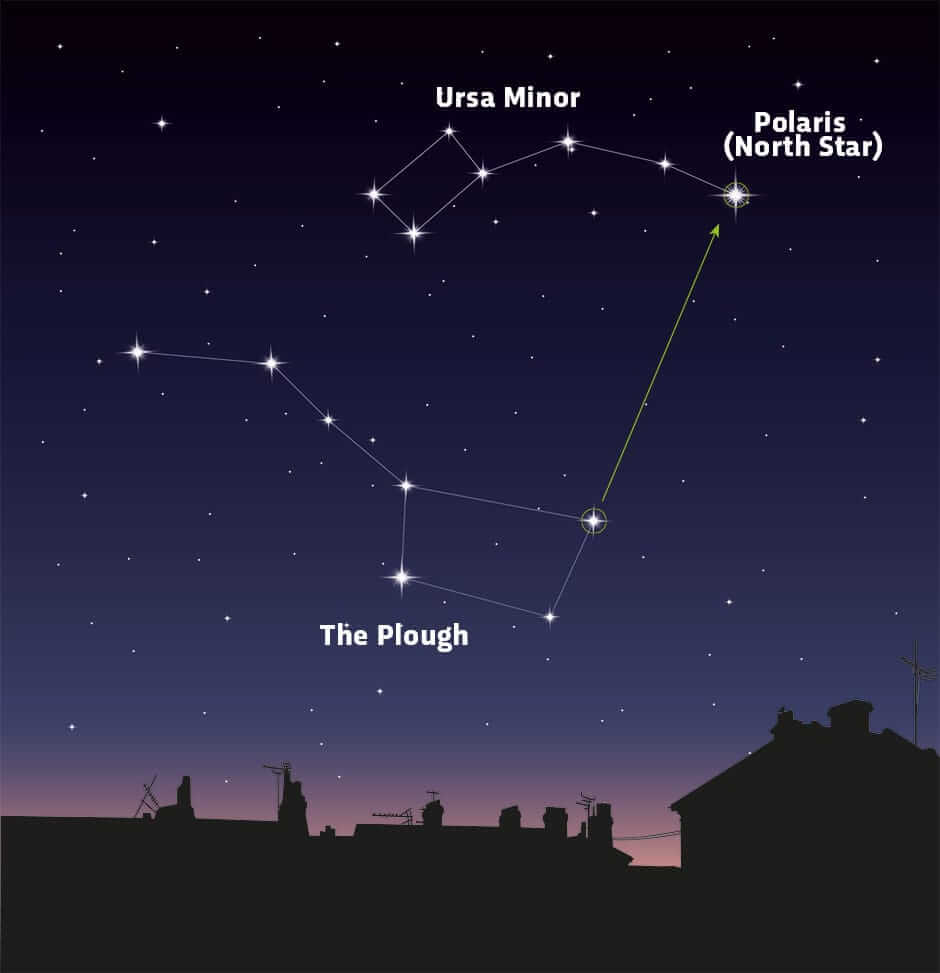
To the north, locate Ursa Major (the Big Dipper/The Plough). Trace the outer edge of its “bowl” and extend that line about five times upward to find Polaris, the North Star, which sits almost directly above Earth’s axis and has guided travellers for centuries.
This is because Polaris appears almost fixed in the sky, while the surrounding constellations slowly rotate around it, meaning if you look again a few hours later, you’ll notice the stars have shifted, but Polaris remains in the same place.
When stargazing in Ireland, you can also spot planets with the naked eye: Venus appears as an intensely bright “white star,” Jupiter shines with a slight golden tint, and Mars is easy to recognise thanks to its distinct reddish glow. A simple way to tell the difference: stars tend to twinkle, while planets shine with a steady light.
On a clear Irish night, you’re not just looking at distant points of light, you’re seeing objects hundreds to thousands of light-years away. Once you become familiar with all these stars and planets, you’ll start spotting them almost instantly whenever you look up at the night sky. Pretty cool right!
Best Time for Stargazing in Ireland
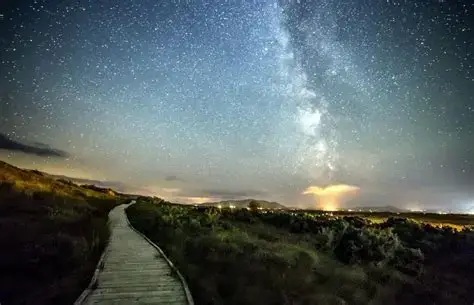
The best time for stargazing in Ireland is from September to April, when the nights are longer and darker. The Milky Way is visible again after dipping below the horizon during the brighter summer months.
Winter, in particular, offers some of the clearest and sharpest conditions for visiting Dark Sky Reserves in Ireland, making it one of the most rewarding times to head out under the stars.
For the best experience, plan your stargazing in Ireland around the new moon. Dark, moonless nights make a huge difference, revealing far more stars and allowing the Milky Way to stand out clearly.
Other Great Places for Stargazing in Ireland
While the three official Dark Sky Reserves in Ireland are the top destinations, Ireland has several other excellent stargazing locations that offer impressive night skies on clear nights.
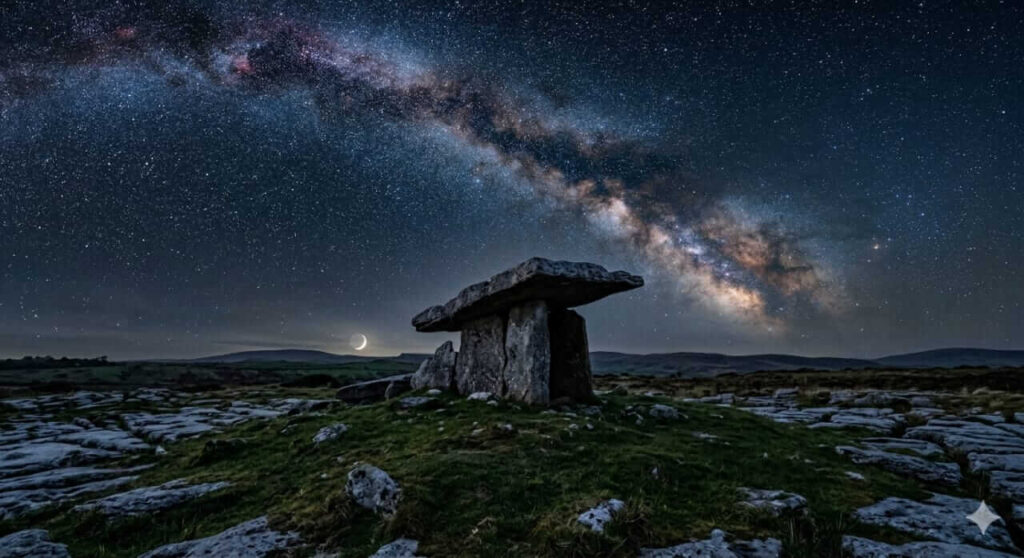
The Burren, County Clare: The Burren’s limestone landscape and open horizons make it a striking stargazing location in Ireland. Areas around the Cliffs of Moher and Poulnabrone Dolmen offer relatively dark skies. Check out all the best things to do in nearby Doolin.
Connemara, County Galway: Remote, rugged, and Atlantic-facing, Connemara offers naturally dark skies with very low light pollution. The areas around Clifden and Roundstone are particularly good for Milky Way viewing.
Donegal (Wild Atlantic Way): One of Ireland’s best regions for aurora and Milky Way spotting. Malin Head, Inishowen, and Fanad Head all benefit from minimal light pollution and wide northern horizons.
Antrim Coast, Northern Ireland: A designated “Milky Way Class” region in parts, the north coast is ideal for astrophotography. Dunluce Castle and the Giant’s Causeway are standout night-sky locations.
Wicklow Mountains National Park: Close to Dublin but surprisingly dark in parts. Glendalough offers a mix of history and decent night skies, making it ideal for short stargazing trips from the capital.
Newgrange, County Meath: Famous for its winter solstice alignment, the Boyne Valley also offers reasonably dark skies and a unique astronomical heritage setting. We highly recommend a visit to Newgrange – Find out how to visit Newgrange here.
Stargazing in Ireland Tips
You can capture a good Milky Way shot with a modern smartphone and a basic tripod from within any of the three Dark Sky Reserves in Ireland.
For real-time constellation identification, Stellarium is the app we have used for years. Simply put it up to the sky and read the sky map to identify the stars, planets, and constellations.
Met Éireann’s hourly forecast is your best weather tool for Irish weather, and the Clear Outside app gives a cloud cover breakdown by hour that is useful for deciding whether to drive an extra hour west in search of a clear window.
Protect your night vision, use the red-light headlamp option only, keep your phone screen dimmed, and give yourself 20 minutes to allow your eyes to adjust naturally as darkness falls
It’s also important to dress properly. Even in summer, temperatures can drop quickly once you’re standing still for long periods. Thermal layers, a windproof jacket, and a warm hat make a big difference.
Small things matter more than you think. A lightweight foldable chair makes it far easier to relax and look up at the sky. Add a flask with a hot drink (we always bring mint hot chocolate) and enjoy the heavens above.
Stargazing in Ireland: Packing Checklist
Essential gear for comfort and clear-sky enjoyment when stargazing in Ireland:
- A Packable Lightweight Jacket: Temperatures drop fast once the sun disappears.
- Thermal socks, hats, gloves: cold hands and a camera don’t mix.
- Red-light Headlamp: Rechargeable headlamp, so you don’t ruin your night vision.
- Yeti Tumbler Cups: built to last (ours are 6 years strong) and keep your drink hot for hours, pair with an espresso maker and midnight snacks for the best experience.
- Portable Charger: You will be taking lots of pictures. Don’t forget the power cable!
- Digital Camera: when your phone just isn’t cutting it anymore.
- Binoculars: Bestselling Binoculars for stargazing, comes with a tripod.
- Lightweight Camping Chair: Espresso in hand, stars overhead, nowhere else to be.
Discover more stargazing routes with these related articles — ideal for planning your perfect night-sky adventure.
- 7-Day Dark Sky Europe Stargazing Road Trip Itinerary
- Best Dark Sky Reserves in Europe
- Best Astro-Tourism Wellness Retreats to Change Your Life
What It Costs to Go Stargazing in Ireland
Stargazing in Ireland itself is free, but your overall cost depends on how you travel and where you stay. Here’s a rough guide to help you plan:
| Category | Budget (€) | Mid-Range (€) | Luxury (€) |
|---|---|---|---|
| Accommodation/night | €70–90 | €90–120 | €150+ |
| Car Rental/day | €35–60 | €60–90 | €100+ |
| Food/day | €25–40 | €50–70 | €100+ |
| Experiences | Mostly free–€20 | €20–50 | Private guides available |
Stargazing in Ireland: Frequently Asked Questions
Q1: Can you see the Milky Way or Northern Lights in Ireland?
Yes! The Milky Way is visible in all three Dark Sky reserves in Ireland.
The Northern Lights in Ireland appear occasionally, especially in Mayo or Donegal on strong solar activity nights. Having said that, we have witnessed the Northern Lights in Cork and Clare. It was so visible to the naked eye, and one of the most extraordinary natural events we have ever witnessed in Ireland.
Q2: Are the Dark Sky Reserves in Ireland Free to visit?
Yes — Ireland’s Dark Sky Reserves are free to visit, as they are open natural areas rather than ticketed attractions, simply by finding a suitable dark location within the region.
You only need to pay if you choose optional extras such as guided tours, observatory visits, or special events, but the stargazing itself is completely free.
Q3: Do I need a telescope for stargazing in Ireland?
No. The dark sky sites in Ireland are dark enough that the naked eye experience alone is extraordinary.
The Milky Way is visible without any optical aid from all three designated Dark Sky Reserves in Ireland, as are thousands of individual stars, multiple nebulae, and, on a clear night, the Andromeda Galaxy — the most distant object visible to the human eye.
Binoculars (7×50 or 10×50) add enormous detail and are far more practical in the field than a telescope for beginners.
Q4: Which of the Dark Sky Reserves in Ireland is best for families?
For families with children, OM Dark Sky Park in Tyrone has the most educational programming and the most accessible facilities of the three sites.
The Skellig Coast Dark Sky Festival offers structured experiences with expert guidance that are ideal if you want to learn rather than simply look.
Kerry International Dark Sky Reserve is the most accessible and best supported for first-time stargazers.
The infrastructure around Portmagee and Valentia Island means you can park, walk a short distance to a dark viewing point, and be under genuinely exceptional skies within minutes of arrival.
Q5: Is stargazing in Ireland safe to do solo?
Yes, with sensible precautions. Stick to marked paths and designated viewing areas, always tell someone where you are going, and carry a fully charged phone with an offline map downloaded.
The Dark Sky Reserves in Ireland are well-maintained, and the viewing points are easily accessible. Avoid venturing off-trail onto open bog at night, particularly in Mayo, where the terrain can be deceptive in daylight, let alone darkness.
A red-light headlamp is essential; white light destroys your night vision and makes navigating back to the car harder than it needs to be.
Plan Your Perfect Stargazing Escape in Ireland
From the shimmering coasts of Kerry to the tranquil skies of Mayo and the untouched wilderness of the Sperrins, stargazing in Ireland is more than just a nighttime activity – it’s a journey into nature, silence, and cosmic wonder.
With officially designated International Dark Sky Places, minimal light pollution, and growing support for noctourism, Ireland offers some of the clearest and most awe-inspiring night skies in Europe.
So pack your binoculars, fill up your flask, and let the stars lead you to your next adventure – because stargazing in Ireland delivers unforgettable experiences after dark.


This post contains affiliate links. If you click on the links to make a purchase, we will earn a small commission. This is at NO EXTRA COST to you. This is a free way to support us and allow us to continue to create inspiring adventure travel guides.



[…] on the Ring of Kerry, Waterville is the first place in Ireland with an International Dark Sky Reserve, and it is also a links steeped in golf legend and one of the best-known stops on any Ireland golf […]