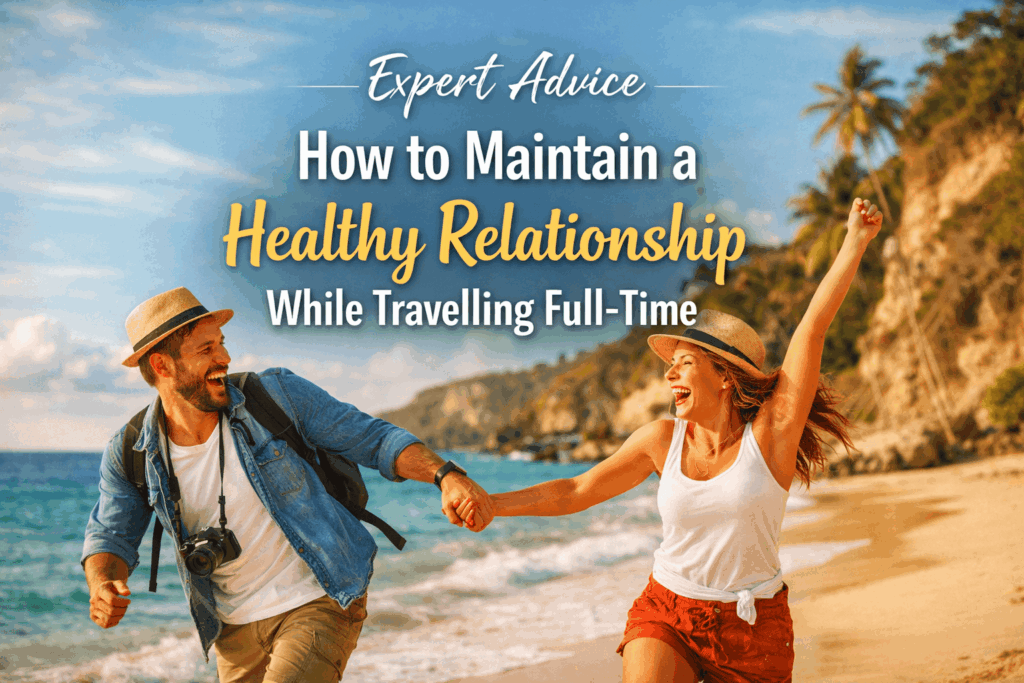

Travelling the world as a couple sounds like a dream — and often, it is. But behind the sunsets, bucket lists, and Instagram highlights, there’s a quieter reality many don’t talk about: maintaining a healthy relationship while travelling full-time can be both deeply rewarding and incredibly challenging.
As someone with a Master’s degree in psychology — and one half of a travel couple who has been on the road with my husband Kevin for over four years — I’ve experienced both sides. I’ve studied relationship dynamics in theory, but I’ve also lived them through missed buses, food poisoning, long-haul flights, and navigating entirely new cultures together. Let’s just say “I get it!”
This guide blends psychological research with real-life experience to help you understand what actually affects relationships on the road — and how to build a strong, healthy relationship while travelling together.
In this article, you’ll learn:
- The key factors that influence a healthy relationship while travelling (including hunger, fatigue, hormones, and mental health)
- Common causes of relationship problems while travelling and how to manage them
- Evidence-based strategies to improve communication, trust, and emotional connection
- Practical tips for maintaining intimacy, appreciation, and balance while travelling as a couple
- How to manage stress, conflict, and decision-making in a travel relationship
Whether you’re planning your first trip together or already navigating life on the road, this guide will give you the tools to build a strong, supportive, and healthy travel relationship — grounded in both science and lived experience.
Maintaining a Healthy Relationship While Travelling: Key Factors at a Glance
| Factor | How It Affects a Travel Relationship | How to Maintain a Healthy Relationship While Travelling |
|---|---|---|
| Communication | Misunderstandings increase due to stress and constant decisions | Use active listening, express needs clearly, check in daily |
| Trust & Independence | Constant proximity can create tension | Allow space, support independence, build trust |
| Hunger | Low blood sugar leads to irritability (“hangry”) | Carry snacks, plan meals, recognise physical triggers |
| Fatigue | Tiredness reduces patience and emotional control | Prioritise rest, avoid overpacking itineraries |
| Hormones | Mood and energy fluctuations affect interactions | Increase awareness and communicate openly |
| Mental Health | Travel can cause anxiety, overwhelm, burnout | Slow down, support each other, check in regularly |
| Stress | Travel disruptions increase emotional reactivity | Take breaks, avoid decisions under stress |
| Intimacy | Busy schedules reduce connection | Prioritise quality time and emotional closeness |
| Play & Fun | Overplanning reduces enjoyment | Stay spontaneous and laugh through challenges |
| Respect & Appreciation | Stress can lead to taking each other for granted | Show gratitude and acknowledge effort |
| Assumptions | Misinterpretation causes unnecessary conflict | Clarify instead of assuming |
| Exercise | Low movement affects mood and energy | Stay active through walking or activities |
| Kindness | Stress reduces thoughtful gestures | Do small, intentional acts of care |
A Quick Note on Healthy Relationships While Travelling
Before we dive in, it’s important to say this clearly:
A healthy relationship while travelling (or at home) should feel safe, respectful, and supportive — even during difficult moments.
Travel can amplify existing relationship issues. If you’re experiencing consistent patterns of control, fear, emotional distress, or feeling unsafe, it’s important to speak to someone you trust or reach out to a professional or helpline in your country.
This article is about strengthening healthy relationships while travelling, not fixing harmful ones.
Common Relationship Problems While Travelling (and How to Fix Them)
Even in the healthiest relationships, travelling as a couple can bring challenges. In fact, many relationship issues while travelling are not caused by the relationship itself, but by external stressors:
- Constant decision-making
- Lack of routine
- Physical fatigue
- Financial pressure
- Cultural unfamiliarity
- Reduced personal space
Research in relationship psychology shows that stress reduces emotional regulation and increases reactivity. In simple terms: 👉 You’re more likely to snap, misinterpret, or withdraw when overwhelmed.
From personal experience, some of our biggest arguments travelling as a couple didn’t come from major issues — they came from being tired, hungry, or overstimulated in a new environment.
Understanding this is key: It’s often the context, not the relationship itself, that creates tension while travelling as a couple.
1. Hunger and Irritability: The “Hangry” Effect in Travel Relationships
One of the most underestimated factors in relationship issues while travelling is something very simple: food.
From a biological standpoint, low blood sugar affects mood regulation. Studies show that when glucose levels drop, the brain has less capacity for emotional control — making irritation and conflict more likely.
Why This Matters More While Travelling
- Irregular eating schedules
- Unfamiliar foods
- Long travel days
- Limited access to snacks
Personal Insight
Some of our most unnecessary arguments have happened in airports or after long journeys — and almost always, food was involved.
What Helps
- Carry snacks at all times
- Plan meals around travel days
- Recognise irritability as a physical signal, not a relationship problem
Takeaway: Managing hunger is a simple but powerful way to maintain a healthy relationship while travelling. We don’t catch this on time but when you do realise that your short temper could have something to do with skipping that snack, own it. Put your hand up, own it and here’s the big bit – apologise! This was my Everest – still working on it! 🙂
2. Fatigue and Sleep Deprivation: The Silent Relationship Killer While Travelling
Sleep plays a critical role in emotional regulation, communication, and patience — all essential for a healthy relationship while travelling full-time.


The Science
Sleep deprivation affects:
- Mood stability
- Empathy
- Conflict resolution
- Stress tolerance
Travel-Specific Challenges
- Jet lag
- Overnight transport
- Changing environments
- Poor-quality accommodation
Real Experience
There’s a noticeable shift in how we communicate when we’re tired. Small issues feel bigger. Tone changes. Patience disappears.
Practical Strategies
- Prioritise rest days (not just sightseeing)
- Avoid overpacking your itinerary
- Recognise when conflict is fatigue-driven
Sometimes the healthiest thing you can do for your relationship is… take a nap. You’re welcome!
3. Hormones, Mood, and the Menstrual Cycle While Travelling
This is rarely discussed in travel content, but it plays a significant role in mental health and relationship dynamics while travelling.
The Psychological and Biological Link
Hormonal fluctuations can influence:
- Emotional sensitivity
- Energy levels
- Irritability
- Stress response
Why Travel Amplifies This
- Disrupted routines
- Physical stress
- Diet changes
- Sleep disruption
Personal Reflection
Understanding hormonal patterns has been incredibly helpful in how I communicate and respond — and how we support each other in our relationship while travelling full-time.
What Helps
- Awareness of cycles and patterns
- Open communication
- Adjusting expectations during lower-energy periods
This isn’t about blaming hormones — it’s about understanding how biology interacts with the environment. Educating yourself and your partner around this subject will do wonders for your relationship as a travel couple.
4. Mental Health While Travelling as a Couple
Mental health while travelling is often overlooked in favour of the “adventure narrative.” But travel can bring:
- Anxiety
- Overwhelm
- Loneliness
- Burnout
The Research Perspective
Constant change removes psychological stability. Humans thrive on familiarity — and travel removes that anchor.
Personal Experience
Even in the most beautiful places, there have been moments of overwhelm or emotional exhaustion. Although I have been travelling full-time for many years, I still experience pre-travel anxiety from to time – read more about ways I understand and manage pre-travel anxiety here.
Impact on Relationships
When one or both partners are struggling mentally while travelling:
- Communication becomes harder
- Misunderstandings increase
- Emotional support becomes more important
What Supports a Healthy Relationship While Travelling
- Regular check-ins with each other
- Space for individual processing
- Recognising when you need a slower pace
A strong travel couple dynamic isn’t about being happy all the time — it’s about supporting each other through the full emotional range. Your mental health underpins everything else when it comes to maintaining a healthy relationship while travelling full-time.
5. Communication: The Foundation of a Healthy Relationship While Travelling
If there’s one factor that consistently predicts travel relationship success — both in research and real life — it’s communication.
Why Communication Changes While Travelling
- More decisions to make daily
- Increased stress
- Less personal space
- Cultural misunderstandings
Common Travel Communication Issues
- Decision fatigue (“I don’t mind, you choose”)
- Misaligned expectations
- Tone misinterpretation
What Actually Works
From both psychology research and experience:
- Be clear, not passive
- Express needs early
- Avoid mind-reading expectations
- Use “I feel” instead of blame
A Simple Practice
Daily check-ins to your travel partner:
- How are you feeling?
- What do you need today?
It sounds simple — but it’s incredibly effective in maintaining a healthy relationship while travelling.
6. Play and Fun: Keeping the Relationship Light While Travelling
When people think about maintaining a healthy relationship while travelling, they often focus on problem-solving — but play is just as important.
The Science of Play in Relationships
Play in relationships increases:
- Connection
- Bonding hormones (like oxytocin)
- Positive communication
Why Play Matters More While Travelling
Travelling as a couple can become:
- Logistical
- Stressful
- Goal-oriented
Personal Insight
Some of our best travel moments as a couple come from:
- Being spontaneous
- Laughing at things going wrong
- Not taking everything seriously
Ideas for Play as a Travel Couple
- Try something new together
- Turn mishaps into stories
- Let go of perfect plans
A healthy travel relationship isn’t just functional — it’s enjoyable. You are meant to be “living your best life” after all!
📸✨ Watch this Instagram Reel to see first-hand how we get on in our efforts to maintain a healthy relationship while travelling as a couple. It’s all about balance, and showing interest in your partner’s interests – all while trying to survive! 😄
7. Trust and Independence While Travelling as a Couple
Spending 24/7 together can blur boundaries — which makes trust and independence as a travel couple even more important.
The Psychology Behind It
Healthy relationships while travelling require:
- Autonomy
- Individual identity
- Personal space
Travel Challenges for the Relationship
- Constant proximity
- Shared decisions
- Limited alone time
What Helps
- Taking solo time (even a walk or coffee)
- Respecting different interests
- Encouraging independence
Real Experience
Some of our strongest moments as a travel couple have come from giving each other space — not just staying together constantly. Just make sure to communicate your intentions and needs around this clearly!
8. Managing Conflict While Travelling as a Couple
Conflict is normal — especially in travel relationships. Long days, unfamiliar surroundings, and the stress of planning itineraries or managing budgets can amplify small disagreements. Recognising that conflict is natural helps travel couples approach it with patience and understanding, creating a healthier travel dynamic.
The Goal Isn’t to Avoid Conflict
It’s to manage it well. Trying to avoid disagreements entirely as a full-time travel couple can create tension and unspoken frustration. Instead, aim to navigate conflicts constructively. Understanding that disagreements are opportunities to learn about each other’s needs, preferences, and limits will make your travel relationship more resilient — both on the road and back home.
Evidence-Based Strategies
- Take breaks during arguments – Step away from a tense situation to cool down.
- Avoid escalation – Keep your tone calm, avoid blame, and steer clear of past grievances.
- Focus on resolution, not winning – The goal is compromise and understanding, not proving you’re right.
A Travel-Specific Tip
If possible, don’t try to resolve everything in the middle of stressful situations like airports, busy transport, or long drives. Timing matters. Sometimes it’s better to acknowledge the disagreement, give each other space, and revisit the conversation when you’re both calmer.
9. Balancing Routine and Spontaneity in Travel Relationships
Humans need both:
- Structure (for stability)
- Novelty (for excitement)
Finding the right balance between routine and spontaneity is especially important for couples who travel full-time. While new experiences keep travel exciting, too much chaos can create stress as a travel couple. Maintaining some structure provides emotional stability and helps relationships thrive even in unpredictable environments.
Travel Often Leans Too Far Into Chaos
Without balance, constant movement and unplanned adventures can impact:
- Mental health – Lack of routine can disrupt sleep, increase stress, and make it harder to manage emotions.
- Relationship stability – Constant unpredictability may lead to misunderstandings, irritability, or feeling disconnected from your partner.
Recognising when travel has tipped too far into chaos allows couples to reset and bring back a sense of calm and connection to the relationship while travelling.
What Works
- Light routines – Simple habits like morning coffee together, journaling, or daily check-ins help create a sense of stability without feeling rigid.
- Flexible plans – Build itineraries with room for spontaneity. Planning highlights but leaving free time prevents stress and preserves excitement.
- Built-in rest days – Scheduling downtime or low-key days allows both partners to recharge physically and emotionally, strengthening your relationship and preventing burnout.
This balance between routine and novelty is key to maintaining a healthy, sustainable relationship while travelling long-term. Couples who master this approach enjoy both adventure and connection, making travel a shared joy rather than a source of conflict.
Personal Insight
🏝️ Watch this video to see what slow travel looks like for us as a full-time travel couple. We need to slow down into a more structured routine when we are feeling stressed in our relationship while travelling.
10. Financial Stress and Decision-Making While Travelling as a Couple
Money is one of the leading causes of conflict in relationships while travelling. Even couples who rarely argue about finances at home can find that travel amplifies differences in spending habits, budgeting styles, and attitudes toward money. Being proactive about financial discussions is key to maintaining a healthy relationship while travelling full-time.
Travel-Specific Financial Stressors
Some of the most common sources of financial stress for traveling couples include:
- Budgeting – Deciding how much to spend on accommodation, meals, experiences, and transport can lead to tension if expectations differ.
- Unexpected costs – Flight delays, emergencies, or sudden changes in plans can disrupt carefully planned budgets.
- Different spending styles – One partner may prioritize experiences, while the other prefers saving or limiting expenses, which can lead to frustration if not addressed openly.
Recognising these stressors before and during the trip allows travel couples to plan ahead and reduce conflict.
What Helps
- Clear financial communication – Regularly discussing budgets, expenses, and priorities ensures both partners are on the same page.
- Shared expectations – Agreeing on spending limits, trip priorities, and “splurge vs. save” decisions prevents misunderstandings.
- Defined roles if needed – Assigning responsibilities, like one partner managing daily expenses while the other handles accommodation, can streamline financial decision-making.
Transparency around money reduces tension and prevents financial disagreements from affecting the overall travel experience as a couple.
Personal Insight
Check out some of the ways we avoid financial stress while travelling full-time as a couple in some of our travel guides below:
- Budgeting While Travelling: 💰 Master Your Travel Budget – Learn How to Travel Smart Without Breaking the Bank!
- Saving for Travel: 🏖️ Start Saving Today – Turn Your Travel Dreams into Reality!
- Ultimate List of Travel Tips: ✈️ Travel Like a Pro – Discover the Ultimate Tips Every Adventurer Needs!
11. Maintaining Intimacy While Travelling as a Couple
When people think about maintaining a healthy relationship while travelling, intimacy is often overlooked — yet it’s one of the most important aspects of long-term connection.
The Psychology of Intimacy
In psychological terms, intimacy isn’t just physical — it includes:
- Emotional closeness
- Vulnerability
- Feeling seen and understood
Research shows that intimacy is strongly linked to relationship satisfaction, trust, and emotional security.
Why Intimacy Can Change While Travelling
Travelling full-time can unintentionally reduce intimacy due to:
- Fatigue and overstimulation
- Lack of privacy (shared rooms, hostels, constant movement)
- Different energy levels
- Stress and decision fatigue
Personal Insight
From experience, intimacy doesn’t disappear for couples while travelling — it just requires more intentional effort. After long travel days or busy itineraries, connection can easily be replaced by exhaustion.
How to Maintain Intimacy While Travelling
- Prioritise quality time without distractions
- Create small rituals (morning coffee, evening chats)
- Be open about needs and energy levels
- Focus on emotional connection, not just physical
A healthy travel relationship isn’t about constant closeness — it’s about staying connected, even when routines are constantly changing.
12. Active Listening: The Most Underrated Skill for Travel Couples
Strong communication is essential for a healthy relationship while travelling, but one of the most powerful — and often overlooked — skills is active listening.
What is Active Listening?
In psychology, active listening means:
- Fully focusing on your partner
- Listening to understand, not respond
- Reflecting back what you hear
Why It Matters More While Travelling
Travel introduces:
- More decisions
- More stress
- More opportunities for miscommunication
When you’re tired or overwhelmed, it’s easy to:
- Interrupt
- Misinterpret tone
- Jump to conclusions
Personal Experience
There have been many moments where one of us was trying to express something simple, but the other — distracted or tired — didn’t fully hear it. That’s often where small issues escalate.
How to Practice Active Listening in Your Relationship While Travelling
- Pause before responding
- Repeat back key points (“So you’re feeling…”)
- Avoid multitasking during conversations
- Give full attention, even in busy environments
From both research and real-life experience, feeling heard is one of the strongest predictors of relationship satisfaction.
13. Stop Assuming: How Cognitive Bias Impacts Travel Relationships
One of the biggest hidden causes of relationship issues while travelling is assumption, or what psychology calls mind-reading bias.
The Science Behind It
Humans naturally try to interpret others’ thoughts and intentions, but under stress while travelling, we:
- Jump to conclusions
- Assume negative intent
- Fill in gaps with our own emotions
Travel Makes This Worse
When you’re tired, hungry, or overwhelmed while travelling as a couple:
- Neutral comments can feel critical
- Silence can feel like disapproval
- Small misunderstandings can escalate quickly
Personal Insight
Many travel disagreements aren’t about the actual issue — they’re about what we think the other person meant.
How to Reduce Assumptions While Travelling
- Ask instead of assume (“Did you mean…?”)
- Clarify tone and intention
- Communicate needs directly
- Slow down reactive thinking
In a healthy relationship while travelling full-time, clarity always works better than assumptions.
14. Small Acts of Kindness: The Key to a Healthy Travel Relationship
When you’re travelling as a couple, it’s easy to fall into routine and overlook small gestures — but they matter more than ever.
The Science of Kindness in Relationships
Research shows that small, consistent acts of kindness:
- Increase relationship satisfaction
- Strengthen emotional bonds
- Reduce conflict intensity
Why It Matters More While Travelling as a Couple
Travel can be:
- Physically draining
- Emotionally intense
- Logistically stressful
Small acts of kindness in a travel relationship become powerful signals of care.
Real-Life Examples as a Travel Couple
- Picking up your partner’s favourite snack
- Handling a task when they’re tired
- Giving them time to rest
Personal Reflection
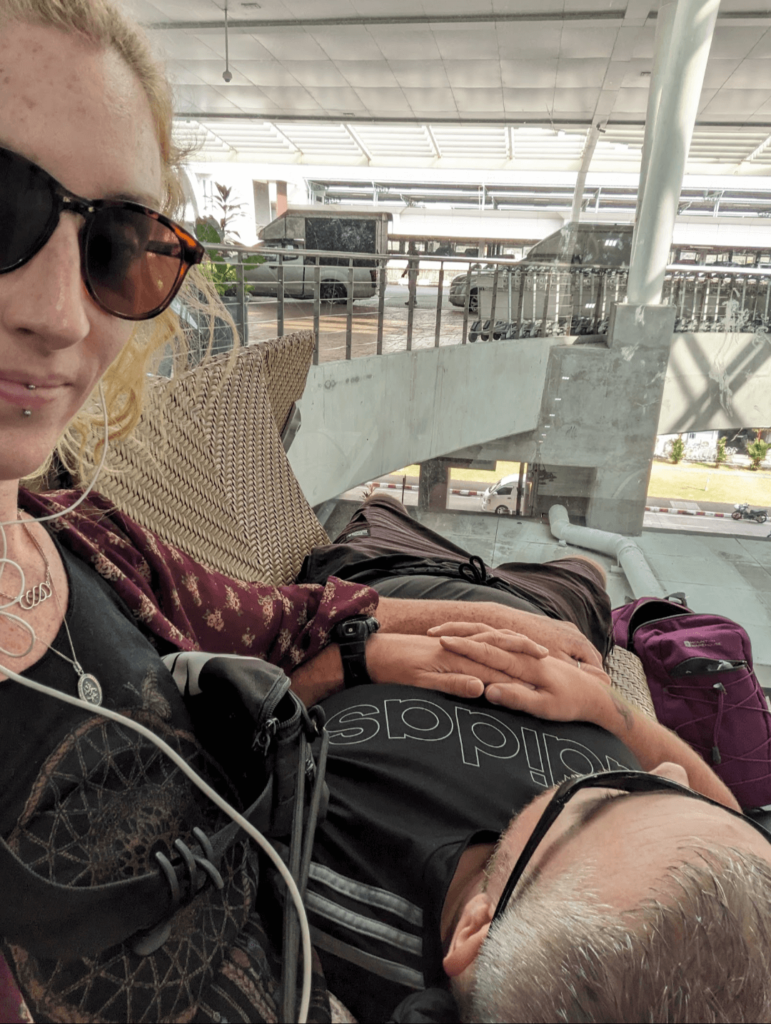
From experience, it’s often the smallest gestures — especially on difficult days — that have the biggest impact in our relationship as a travel couple. Do the shop run, wash the socks, give them the window seat or the better pillow – these gestures to your partner while travelling will communicate more than you know! A healthy relationship while travelling full-time is built just as much on small actions as it is on big experiences.
15. Stress Management for Travel Couples
Yes I’m going to say it, travelling is stressful – well, the travel part can be anyway! Stress is one of the biggest factors affecting a healthy relationship while travelling, yet it’s often underestimated.
Just check out the video below, which showcases just some of the stressors affecting a couple travelling full-time:
The Psychology of Stress in Relationships
When stress levels rise during your travel relationship:
- Emotional regulation decreases
- Patience drops
- Conflict becomes more likely
Common Relationship Stressors While Travelling
- Delays and cancellations
- Navigating unfamiliar environments
- Financial pressure
- Decision fatigue
Personal Experience
Some of the most challenging moments while travelling as a couple haven’t been about the relationship itself — but about external stress spilling into it.
How to Manage Stress as a Travel Couple
- Recognise stress early
- Take breaks before burnout
- Avoid making big decisions when overwhelmed
- Support each other instead of reacting
From both research and experience, managing stress effectively is essential to maintaining a healthy relationship while travelling long-term.
16. Exercise and Movement While Travelling as a Couple
Exercise is often overlooked in travel content, but it plays a powerful role in both mental health and relationship wellbeing while travelling.


The Science Behind It
Physical activity:
- Reduces stress hormones
- Improves mood
- Enhances emotional regulation
Why Exercise Matters for Travel Couples
When you’re moving less or feeling overwhelmed as a travel couple:
- Irritability can increase
- Energy levels drop
- Motivation decreases
Personal Insight
Even something as simple as a walk together can completely shift the mood of the day. You can combine this with play – pick up a ball and head to the beach!
Easy Ways to Stay Active While Travelling as a Couple
- Walk instead of transport when possible
- Try local activities (hiking, swimming, cycling)
- Use movement as a reset during stressful days
Maintaining movement supports both individual well-being and a healthy relationship while travelling.
17. Bonus! Couple Quizzes: Strengthening Your Travel Relationship
While it may sound light-hearted, structured check-ins and even simple couple quizzes can support a healthy relationship while travelling. You might think you know your partner, but asking the right questions can reveal new sides of each other. These conversation starters can deepen your connection as a travel couple and be both fun and insightful.
The Psychology Behind Couple Quizzes
Couple quizzes and regular check-ins aren’t just fun—they have real benefits for your relationship. Psychologists highlight that taking time to ask thoughtful questions can:
- Build trust and connection, especially when navigating stressful or unfamiliar situations like travel
- Strengthen emotional intimacy by encouraging partners to share thoughts and feelings they might not normally express
- Promote empathy, helping each partner understand the other’s perspective
- Reduce misunderstandings and conflict by making communication more intentional
Why It Works for Travel Couples
Even short chats can bring laughter, connection, and fresh insight to your journey together, and you guessed it, help maintain a healthy relationship while travelling full-time!
Simple Questions as a Travel Couple
- What’s one of your favourite memories from childhood, and why?
- If you could relive any day from your past, which would it be and what made it special?
- What’s a small thing in your daily life that makes you happiest right now?
Personal Insight
While couples’ quiz books are great, you can easily find plenty of questions online.
Best Tips for Maintaining a Healthy Relationship While Travelling Long-Term
If you’re travelling as a couple long-term, small daily habits often make the biggest difference in maintaining a healthy relationship while travelling.
- Communicate early rather than letting frustration build
- Don’t make important decisions when tired or hungry
- Prioritise rest days just as much as travel days
- Keep a sense of humour — things will go wrong
- Give each other space without guilt
- Show appreciation regularly, even for small things
- Stay flexible — rigid expectations often lead to disappointment
Key Takeaway: Consistency in small actions is what strengthens a travel couple relationship over time.
FAQ: Healthy Relationships While Travelling as a Couple
How do you maintain a healthy relationship while travelling?
Maintain a healthy relationship while travelling by communicating clearly, setting realistic expectations, and managing stress triggers like fatigue or hunger. Regular check-ins, flexibility, and giving each other space help couples stay emotionally connected and avoid unnecessary conflict on the road.
Why do couples argue more while travelling?
Couples argue more while travelling due to increased stress, decision fatigue, and lack of routine. Being tired, hungry, or overwhelmed can lower patience, causing small disagreements to escalate quickly in unfamiliar environments.
Is travelling together good for a relationship?
Travelling together can strengthen a relationship by building shared experiences, improving communication, and deepening emotional connection. It can also highlight existing issues, giving couples the opportunity to grow if they approach challenges with awareness and teamwork.
How do couples handle conflict while travelling?
Couples handle conflict while travelling by pausing before reacting, taking space if needed, and focusing on resolving the issue rather than winning the argument. Avoiding serious discussions when tired or stressed can prevent unnecessary escalation.
What are the biggest challenges of travelling as a couple?
The biggest challenges include lack of personal space, decision fatigue, financial stress, and miscommunication. Constant proximity and changing environments can increase tension, making it important to manage expectations and prioritise rest.
How do you keep a relationship strong while travelling full-time?
Keep a relationship strong while travelling full-time by maintaining small routines, prioritising quality time, and allowing independence. Open communication about needs, boundaries, and expectations helps couples stay connected despite constant change.
Can travelling cause relationship problems?
Travelling doesn’t create relationship problems but can amplify existing ones. Stress, unfamiliar environments, and spending extended time together can highlight communication issues, making emotional awareness and healthy coping strategies essential.
How do you not get sick of each other while travelling?
To avoid getting sick of each other while travelling, prioritise alone time, pursue individual interests, and avoid spending every moment together. Balancing independence with shared experiences helps maintain attraction, reduce tension, and keep the relationship feeling fresh.
Final Thoughts on Maintaining a Healthy Relationship While Travelling
Maintaining a healthy relationship while travelling full-time isn’t about avoiding challenges — it’s about understanding them.
Travel brings incredible highs, but it also introduces very real pressures: fatigue, hunger, stress, constant decision-making, and emotional ups and downs. From both a psychological perspective and my own experience travelling full-time for over four years with my husband, these external factors often influence how we communicate, respond, and connect far more than we realise.
What matters most isn’t perfection — it’s awareness.
When you begin to recognise how things like sleep, mental health, hormones, and stress impact your reactions, it becomes easier to respond with patience rather than frustration. When you prioritise communication, active listening, respect, and appreciation, you create a foundation that can adapt to any environment — no matter how unfamiliar or unpredictable.
A strong travel couple relationship is built in the small moments:
- Choosing kindness when you’re tired
- Communicating clearly when things feel overwhelming
- Giving each other space when it’s needed
- And continuing to show up for each other, even on the harder days
Because ultimately, maintaining a healthy relationship while travelling isn’t just about the destinations you visit — it’s about how you experience them together.
And when you get that balance right, travel doesn’t just test your relationship — it strengthens it in ways that everyday life often can’t.
Travel is an adventure not just for the body but also for the mind. And pre-travel anxiety? It’s part of the journey—human, understandable, and entirely navigable.
We would love to hear your experience of being a travel couple and any tips on maintaining a healthy relationship while travelling full-time.
Please feel free to leave us a message below or contact us through our socials.
Mind Yourself.
Slán go fóil


This post contains affiliate links. If you click on the links to make a purchase, we will earn a small commission. This is at NO EXTRA COST to you. This is a free way to support us and allow us to continue to create inspiring adventure travel guides.