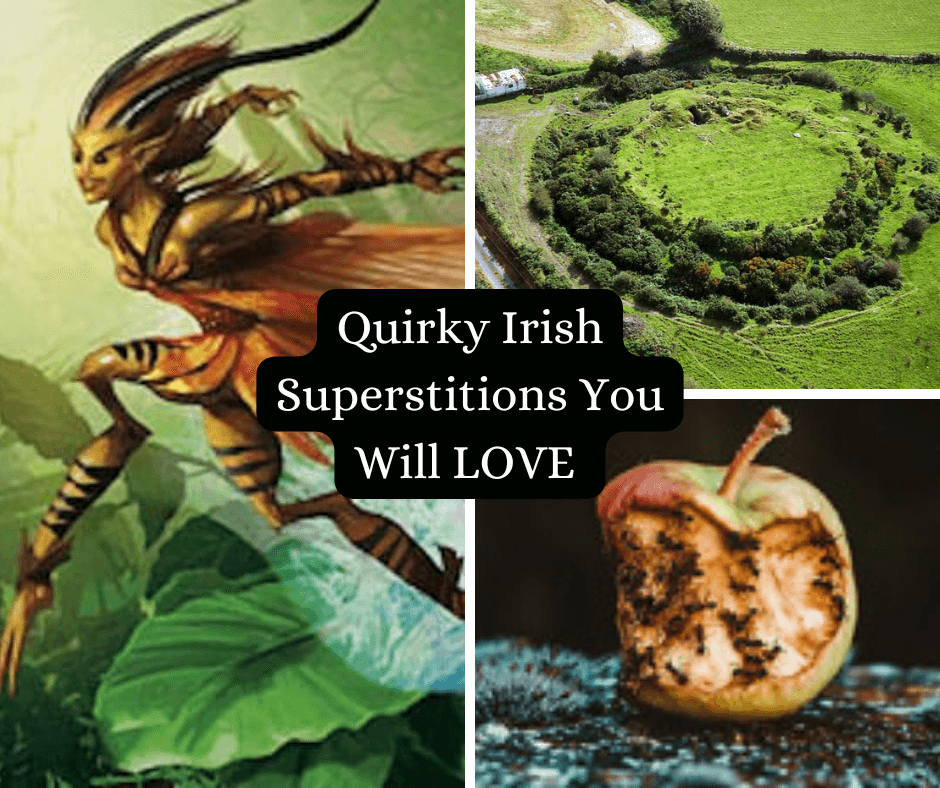

Ireland is a land where the line between myth and reality is as thin as the morning mist over a bog. Growing up here, you quickly learn that some “stories” aren’t just for the tourists—they’re rules you follow if you know what’s good for you.
This guide to quirky Irish superstitions you will love (and possibly never heard of) is more than a list; it’s a collection of living traditions, told by those who grew up with them, whispered at the fireside or shouted across a field in terror!
And before you roll your eyes—yes, even in today’s world, these superstitions still shape decisions. Roads have been diverted for fairy forts, farmers won’t cut certain bushes, and you might still see someone salute a magpie.
Let’s dig into the background, the stories, and the curious ways these beliefs still survive.
Planning a trip to Ireland? Create your ultimate personalized Ireland itinerary to include all the best Irish attractions, delivered by a passionate team of Celtic Experts. Now 15% off for a limited time!!
Best Travel Tools for First-Time Visitors to Ireland:
If you are planning a trip to Ireland, these top-recommended links below feature some of the best deals and trusted options out there – from transportation to hotels and more.
Let’s be honest, Ireland is expensive enough (have you seen the price of a pint?), so let’s save where we can and spend more on the fun stuff!
- Flights to Ireland: Compare on Trip.com
- Hotels in Ireland: Book on Trip.com
- Car Rentals in Ireland: Search deals on DiscoverCars
- eSIM for Ireland: Buy with Drimsim – a virtual eSIM delivered within minutes
- Travel Insurance for Ireland: Get covered with World Nomads
1. The Banshee — Ireland’s Ominous Guardian Spirit
The banshee (bean sídhe, meaning “woman of the fairy mound”) is one of the most famous figures in Irish folklore, but here’s the thing: most articles treat her as a spooky Halloween prop. The truth is more complex—and more chilling.

Traditionally, the banshee isn’t a random ghost but a harbinger of death tied to specific ancient Irish families. When someone from those lineages is about to die, she appears—sometimes as a young, beautiful woman, sometimes as an old crone—keening a mournful cry that can shatter your peace of mind.
Growing up in rural Ireland, you’d hear stories of neighbours swearing they’d heard her wail the night before a funeral. My own grandmother claimed she saw the banshee brushing her long silver hair beside a stream near County Clare.
Why it matters today: Even those who don’t “believe” outright will lower their voices when discussing a recent banshee sighting. You never tempt fate.
2. Fairy Forts & Fairy Paths — The Ancient Places You Don’t Disturb
If you ask an Irish person, “Do you believe in fairies?” they might smirk. But ask if they’d cut down a lone hawthorn tree in a field and watch their answer change.
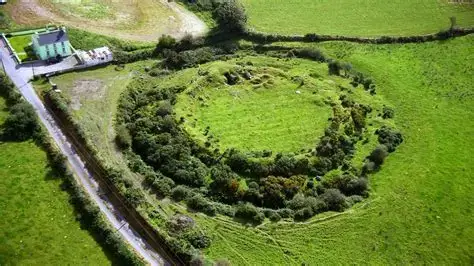
Fairy forts are actually ancient ringforts—circular earthworks dating back over a thousand years. In Irish tradition, Fairy Forts were believed to be portals to the Otherworld—a magical realm inhabited by the Aos Sí, or fairies.
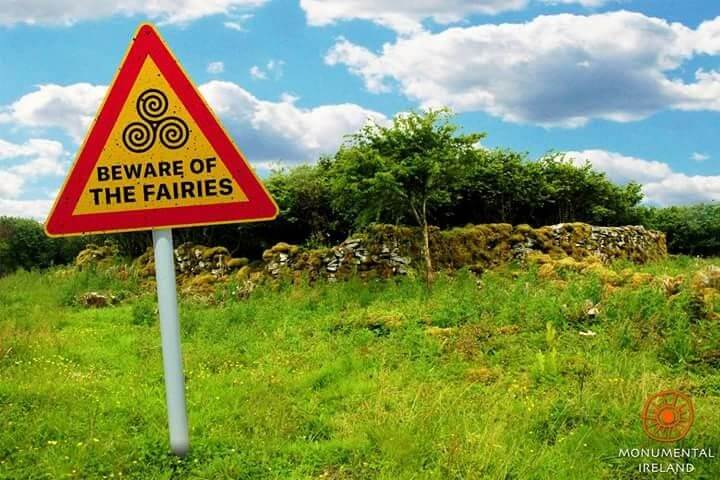
It was said that these forts were enchanted spaces where the veil between our world and the fairy realm was thin, allowing supernatural beings to cross over or influence the human world. Because of this, Fairy Forts were considered sacred and often avoided; disturbing one could bring bad luck, misfortune, or even a curse.
True Story: This belief is so strong that in the late 1990s, a major road project in Clare was famously rerouted to avoid a fairy bush.
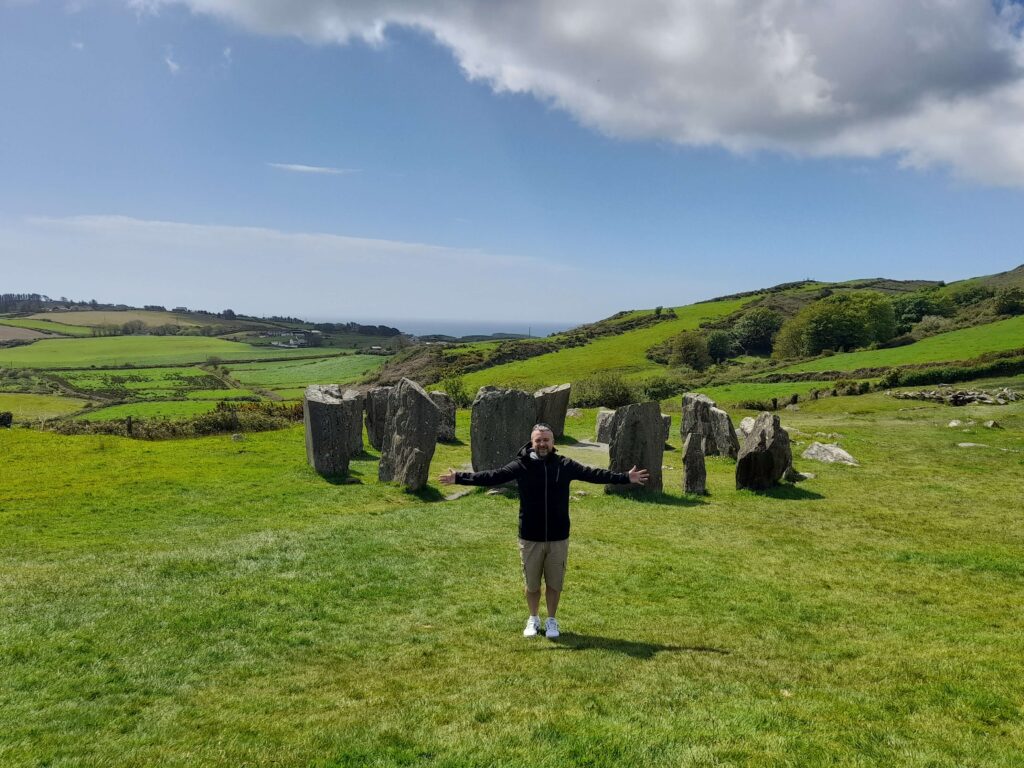
These ancient stone circles in Ireland are extremely interesting. Just read about Cork’s Drombeg Stone Circle to find out how to visit one of the ancient megalithic Irish sites during your trip.
Then there are fairy paths—invisible routes the fairies are said to travel. Block their way (say, by building a house over it) and you invite illness, livestock trouble, or worse. In Kerry, locals tell of a family plagued by mysterious deaths until they demolished part of their new home that lay across such a path.
Why it matters today: Farmers still plough around these sites, and even government surveys mark them as “archaeological” just to be safe.
Check out some related articles to delve deeper into the fascinating history and mythology of Ireland:
- Best Irish Myths and Legends for Beginners: 10 Timeless Tales
- Self-Guided Irish Mythology Walking Tour in Dublin (Free Map & Itinerary)
- Greatest Megalithic Sites in Ireland that you must visit
- Best Castles in Ireland – the ultimate list of Irish Castles
3. Magpie Superstitions — Counting Your Luck
“One for sorrow, two for joy…”—every Irish child grows up knowing the magpie rhyme. Seeing a single magpie is considered bad luck, but you can ward it off by saluting the bird and greeting it politely: “Good morning, Mr Magpie, and how is your lady wife today?”
While magpies now roam the cities, the superstition runs deep. Older variations warn of death when a magpie perches near the house. Some versions swap in joy, silver, or gold for higher numbers, but one magpie alone still unsettles even the least superstitious.

We lived in Australia for years and quickly learned saluting Australian Magpies is not the same – those feckers are vicious!! For a good old laugh, read more about all the hilarious things we learned as Irish in Australia!
Other birds have their own omens:
- A robin flying into the house can foretell death.
- The wren, once hunted on St. Stephen’s Day, was thought to carry secrets to enemies.
- Ravens circling overhead were seen as war omens in older sagas.
Why it matters today: You’ll still see businesspeople in Dublin subtly tipping a nod to a lone magpie—just in case. Kate from Happy Irish Wanderers will never pass a magpie without asking about its wife!
4. The Inside-Out Clothing Trick
One of the quirkiest Irish superstitions you’ve probably never heard of involves turning your clothes inside out if you get lost outdoors. Folklore says this confuses the fairies, who might have lured you off your path.
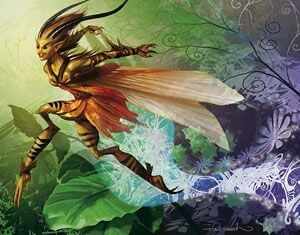
Parents would tell children this before they went berry-picking in summer or walking home from school in the dark. The logic was simple: the fairies wouldn’t recognise you, and they’d leave you alone to find your way back.
No fairies were going to find Kate on this day – check out the video below to find out why:
Why it matters today: While you probably won’t see someone in Galway turning their jumper inside out in broad daylight, the advice is still repeated in rural areas when telling fairy stories to kids.
Keep your Irish learning going with the following articles if you are to survive a trip to Ireland!
- 50 Easy Irish Phrases and Funny Irish Slang Words
- 60 One-Worded Irish Insults you Need to Know
- Why Do Irish People Drink? The Real Reasons Behind the Pint
- Expert Advice on The Best Dos and Don’ts For Visiting Ireland
- 33 Irish Sayings That Confuse Tourists: Explained by an Expert!
- The Most Beautiful Irish Words and Their Meanings
5. May Day Milk Superstition
In Irish rural tradition, Bealtaine (May Day) was a magical and risky time. One superstition warned never to lend or borrow milk on May Day. It was believed that doing so would allow someone to “steal” your good luck, your butter yield, or even the health of your cows for the entire year.
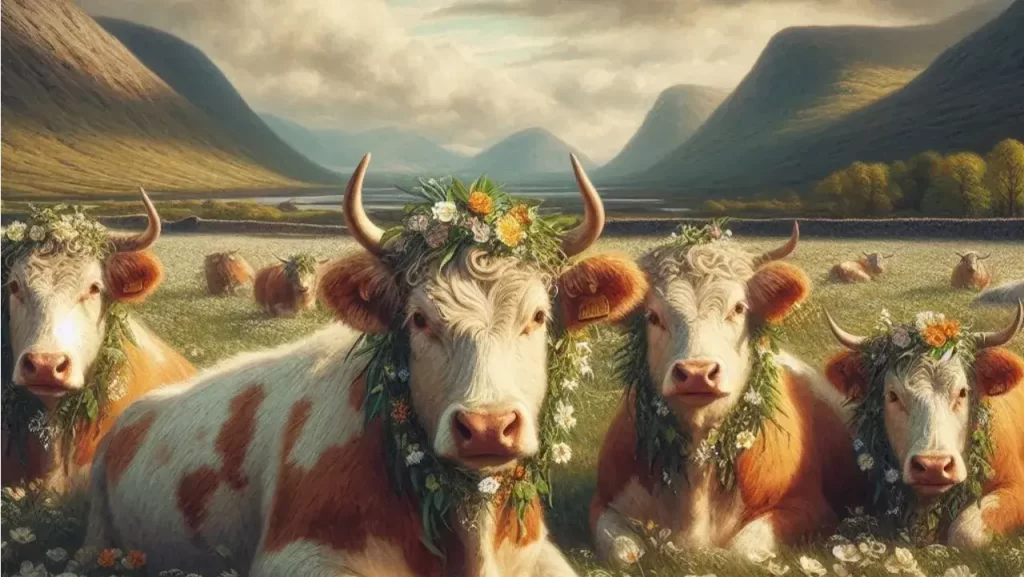
Neighbours might even sprinkle the doorstep with holy water or hang rowan branches over the byre to guard against milk-thieves—human or supernatural.
Why it matters today: It’s a rare superstition now, but older generations still recall being forbidden to give milk away on that day.
6. Piseogs — The Little Farmyard Curses
Piseogs (pronounced “pish-ogues”) are small acts of rural magic—sometimes blessings, often curses. Examples include burying eggs or meat under a neighbour’s gate to sour their milk, or scattering certain herbs to bring on bad luck.
In line with the previous Irish superstition, these weren’t just idle threats. In tight-knit farming communities, piseogs were whispered about whenever cattle fell ill or butter wouldn’t churn.
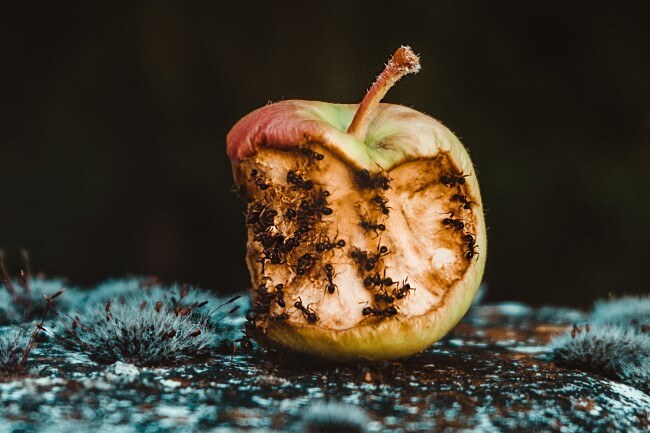
In some older Irish traditions, leaving a half-eaten apple around the house — particularly overnight — was thought to bring bad luck or invite the fairies. The belief was that fairies, spirits, or even ill-intentioned humans could use the leftover food in a form of sympathetic magic against you.
Why it matters today: While few people practice piseogs anymore, the word is still used in Ireland to mean any silly superstition—though with a knowing wink.
- To combat these curses, make sure to read up on the best Irish Blessings to know!
7. Never Whistle at Night
This one’s common across several cultures, but in Ireland it’s specifically tied to the Sluagh—restless spirits of the dead who travel on the wind. Whistling in the dark was thought to attract their attention, inviting them to follow you home.
It also had a practical side: in rural areas, it was a way to discourage making noise that might frighten livestock or attract unwanted human attention.
Why it matters today: In some parts of the west, older people will still shush children for whistling after dark—not “because of the fairies,” of course, but “just in case.”
Planning a trip to Ireland? Check out our helpful guides:
- Discover tips in our How to Visit Ireland on a Budget
- Find the best free Irish Hidden Gems.
- Explore the country with our Ultimate 2-Week Ireland Road Trip Itinerary
- The 5 Best Road-Trip Itineraries in Ireland
- The Most Beautiful Towns in Ireland and Their Attractions
- The 5 Best Counties in Ireland You Need to Visit
- Best Places to Stay in Ireland for First-Time Visitors
8. Healing Stones at the Crossroads
In older Ireland, especially in rural areas, certain stones at crossroads were believed to have curative powers. People with ailments — often warts, sore joints, or skin conditions — would visit the stone, perform a small ritual (such as rubbing the afflicted area on the stone or circling it), and sometimes leave a coin, pin, or piece of cloth as an offering.
The crossroads location was important in Irish folklore because crossroads were seen as liminal spaces — neither here nor there — where the natural and supernatural worlds could meet. Many believed healing could happen more easily in these “in-between” places.
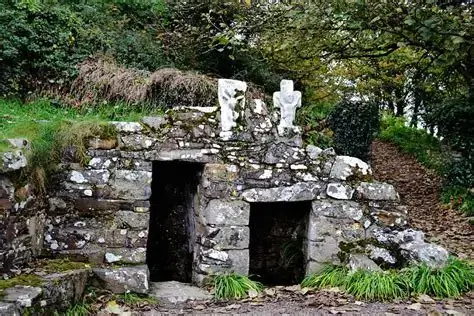
Some of these stones were also linked to holy wells or early Christian saints, blending pagan customs with later religious traditions.
Why it matters today: Some of these stones still exist, with offerings left in modern times—though now it might be a 20-cent coin instead of a silver sixpence.
Why These Irish Superstitions Endure
Ireland’s superstitions are more than old wives’ tales—they’re cultural touchstones. Even those who don’t believe follow them out of respect for tradition, or simply because “why risk it?”
From a storytelling standpoint, these beliefs keep the past alive. They connect modern Ireland to its mythic roots, where the land itself was alive with unseen presences.
For visitors, understanding these quirks isn’t just entertaining—it’s a way to see Ireland through local eyes. You might come for the scenery, but you’ll remember the feeling of standing at a fairy fort and wondering… what if?
- Hunting for the perfect Irish souvenir? Check out the best Irish keepsakes — and what they actually mean — for the ultimate reminder of your trip of a lifetime… and possibly the only thing you’ll remember after all those pints of Guinness!
Quick Guide to Quirky Irish Superstitions and Their Meanings
This handy table breaks down some of the most intriguing and quirky Irish superstitions you’ve probably never heard of, explaining their origins and why they still matter today.
| Superstition | Meaning | Modern Relevance |
|---|---|---|
| Banshee | Heralds death for certain family lines (bean sídhe). | Still mentioned in rural communities; treated with respect. |
| Fairy Fort | Ancient ringforts believed to be homes of the aos sí (fairy folk). | Locals avoid disturbing them; some projects rerouted to protect them. |
| Magpie Rhyme | Number of magpies seen indicates fortune or misfortune. | People still salute single magpies to avert bad luck. |
| Inside-Out Clothes | Turning garments inside out confuses fairies if you are lost. | Shared as children’s advice in countryside storytelling. |
| May Day Milk | Never lend or borrow milk on Bealtaine — you’d give away your luck. | Rare now, but remembered by older generations. |
| Piseogs | Small farm curses or charms (eggs buried, herbs scattered). | Mostly historic, but the term survives in speech. |
| Never Whistle at Night | Whistling can attract the Sluagh or wandering spirits. | Elders still discourage noisy whistling after dark. |
| Healing Stones | Crossroads stones thought to cure ailments when rubbed/left offerings. | Some sites still have tokens or coins left by visitors. |
Irish Culture & Traditions FAQ
What is the Banshee in Irish folklore?
The Banshee is a mythical spirit in Irish folklore whose mournful cry is said to foretell the death of a family member, particularly in ancient Gaelic families.
Are fairy forts real in Ireland?
Yes — fairy forts are ancient circular earthworks, often the remains of early settlements. Many Irish people still treat them with caution, believing they are connected to the fairy realm.
What does it mean if you see one magpie in Ireland?
Seeing a single magpie is traditionally considered bad luck. Some people counter it by greeting the bird with a phrase like “Hello Mr. Magpie” to ward off misfortune.
What is the Puck Fair?
The Puck Fair is one of Ireland’s oldest festivals, held in Killorglin, County Kerry, where a wild mountain goat is crowned “King Puck” in a three-day celebration each August.
What is the Lisdoonvarna Matchmaking Festival?
This County Clare festival, held every September, is Europe’s largest singles event, where traditional matchmakers pair up hopeful romantics amid music and dancing.
What are Irish jigs and reels?
Jigs and reels are types of traditional Irish dance tunes — jigs are usually in 6/8 time, while reels are faster and in 4/4 time. They are often played on fiddles, flutes, and tin whistles.
What instruments are used in Irish traditional music?
Common instruments include the fiddle, tin whistle, flute, uilleann pipes, bodhrán (drum), and the accordion or concertina.
Check out the following articles for some unique Irish adventures off the tourist path:
- Stargazing in Ireland: Ultimate Guide to Irish Dark Skies
- Surfing and Seaweed Baths Along Ireland’s Wild Atlantic Way
Final Thoughts on Quirky Irish Superstitions You Will Love
From the eerie wail of the Banshee to the mysterious pull of fairy forts and the curious tradition of counting magpies, Ireland’s quirkiest superstitions are far more than old tales. They’re a living part of our heritage – threads that tie us to the past, to the land, and to a sense of magic that still lingers in everyday life. Whether you believe in them or simply enjoy their colour and history, exploring quirky Irish superstitions is one of the most fascinating ways to understand the soul of Ireland.
So, next time you’re here, keep your eyes and ears open – you might spot a lone magpie, hear the strains of a fiddle near a fairy fort, or stumble across a festival whose roots go back hundreds of years. In Ireland, even the smallest traditions can hold centuries of wonder.
If you’ve enjoyed learning about these quirky Irish superstitions you probably never heard of, why not explore more of Ireland’s unique culture? From ancient Irish symbols to unforgettable Irish festivals (that aren’t St. Patrick’s Day!), we’ve got plenty more stories and traditions waiting to be discovered.
If you have any questions, please leave us a comment below, and don’t forget to check out our socials for our latest adventures!
Slán go fóil

This post contains affiliate links. If you click on the links to make a purchase, we will earn a small commission. This is at NO EXTRA COST to you. This is a free way to support us and allow us to continue to create inspiring adventure travel guides.