

Alright, Eist! (Listen up!) – We’re not just here to teach you a list of Irish insults. We’re here to live the craic, to share the real heart and soul behind the funny Irish insults and their meanings. There’s a reason Irish insults don’t just sting – they make you laugh, think, and sometimes wonder if the speaker’s actually a secret poet.
Being Irish ourselves, we know there’s a big difference between a bit of slagging from your dad when you’ve messed up, and a proper roasting from the lads at the pub. This is real Irish banter — sharp, quick, and just light enough not to cause trouble. Usually!
Whether you want to learn how to call your mate an “eejit” without starting World War III or craft a poetic Gaelic curse that’s downright beautiful, we’ve got you covered.
Pull up a chair, pour yourself a cuppa or a pint, and get ready to speak fluent insult, Irish style.
What Are Irish Insults and Why Are They So Unique?
Irish insults aren’t about being cruel — they’re about style. There’s a razor-sharp wit and a touch of poetic mischief that makes them pure Hibernian gold.
Unlike the blunt, “you’re stupid” kind of trash talk, Irish insults often come wrapped in irony or storytelling. Like calling someone a “gobshite” – sure, it’s rude, but it also paints this hilarious picture of a fool who can’t stop talking nonsense.
Back in the day, with fewer distractions and more storytelling around the hearth, these insults evolved to be clever. It was a way to call someone out without causing a feud. And trust me, a good Irish insult has layers – the meaning, the delivery, the expression on your face. It’s basically performance art!
As famed Irish playwright Brendan Behan once said, “Insult is the language of the brave.” (Okay, we might have made that up – but you get the gist!)
Plus, there’s something uniquely Irish about friendly insults, the kind that build bonds rather than burn bridges. That’s the craic – good-natured Irish banter.
Funny Irish Insults and Their Meanings (The Most Savage & Hilarious)
The following funny Irish insults and their meanings aren’t just insults – they’re an education in Irish banter.
| Insult | Meaning | Example | Did You Know? |
|---|---|---|---|
| Eejit | Lovable idiot | “He tried to fry soup. What an eejit.” | A national favourite — affectionate and timeless. |
| Gobshite | Fool who talks nonsense | “Yer man’s a gobshite after five pints.” | Coined in Ireland, now used worldwide. |
| Amadán | Fool (more formal/serious) | “You’d swear he’s an amadán sometimes.” | Gaelic insult with rural and dramatic flair. |
| Gombeen | Shady or greedy type | “Don’t be a gombeen with the bill.” | From ‘gaimbín’, once used for corrupt dealers. |
| Dryshite | Killjoy, no craic | “Don’t be a dryshite, come out dancing.” | Used when someone ruins the mood entirely. |
| Gowl | Annoying gob or fool | “You absolute gowl, look what you did.” | Favoured in Limerick; known from The Rubberbandits. |
| Spanner | Total idiot | “He reversed into a wall. Spanner.” | British origin but adopted by Irish teens. |
| Langer | Eejit (Cork slang) | “He’s a pure langer altogether.” | Can also mean drunk — very Cork-centric. |
👉 While on the topic of Cork – the best county in Ireland, check out our top things to do in Cork, and be sure to add these best towns to visit in County Cork – trust us, you won’t regret it.
More on “Eejit”
If you grew up with an Irish mammy or da, you’ve heard “eejit” a thousand times. It’s the perfect mix of exasperation and affection.
The great thing about “eejit” is you can say it with a smile and they’ll probably laugh and admit it was true.

“Ah, you’re such an eejit, but I love you anyway.”
And that’s the key: Irish insults often come wrapped in love, even if you’re telling your brother he’s daft.
More on “Gobshite”
Now, “gobshite” is a bit more aggressive but still often said with a wink among friends. It basically means someone who can’t stop talking nonsense and maybe has no idea what they’re saying. Think of your mate at the pub who just won’t stop going on about politics or conspiracy theories.
Legend has it “gob” means mouth and “shite” is, well, shite. So you’re literally calling them a “mouth full of shite.” Charming, right?
Check out some related articles to delve deeper into the fascinating history of Ireland:
- Greatest Irish Symbols and their meanings that will blow your mind
- Greatest Megalithic Sites in Ireland that you must visit
- Best Castles in Ireland – the ultimate list of Irish Castles
- Best Irish Myths and Legends for Beginners: 10 Timeless Tales
What Is the Irish Slang for Bad?
Now, if you want to complain the Irish way about something going south, you don’t just say “bad.” Nah, we have some proper colorful ways to get that point across—and trust me, these will stick in your head like a catchy tune.
- Manky
This one’s pure Irish through and through. If something’s a bit grimy, broken, or just generally off, you call it manky. Your shoes? Manky. The weather? Manky. That last pint you had? Definitely manky. It’s so common, it’s basically official Irish for “eww.”
Story time: My cousin once tried to impress a Dublin girl with a fancy car. She took one look and said, “It’s grand, but the wheels are pure manky.” That was the end of that romance.
- Boggin
This is for when something’s not just bad, it’s ugly or dirty to the point of no return. Say you walk into a room after a wild party and it looks like a tornado hit—pure boggin.
Did you know? “Boggin” might come from the word “bog,” meaning swampy or muddy. So calling something boggin is like calling it swamp-level bad. Welcome to Ireland!
- Bleedin’ desperate
Ah, the Irish love adding “bleedin’” to everything for emphasis. If something’s in a really rough shape, or someone’s in a tough spot, they’re bleedin’ desperate. Your phone battery at 1%? Bleedin’ desperate. That lad trying to dance sober? Double desperate. - Scuttered
Now, “scuttered” is one of those gems. It means messed up, drunk, or in chaos. If your mate staggers into the pub after a big night out, you say he’s scuttered. Not just drunk, but thoroughly wrecked in the best kind of Irish way.
Fun fact: The word “scutter” itself means to move quickly but erratically, which perfectly describes someone trying to find their way home after one too many.
Ireland Travel Tools
If you are planning a trip to Ireland, these top-recommended links below feature some of the best deals and trusted options out there – from transportation to hotels and more.
Let’s be honest, Ireland is expensive enough (have you seen the price of a pint?), so let’s save where we can and spend more on the fun stuff!
- Flights to Ireland: Compare on Trip.com
- Hotels in Ireland: Book on Trip.com
- Car Rentals: Search deals on DiscoverCars for the best way to explore Ireland in October
- eSIM for Ireland: Buy with Drimsim – a virtual eSIM delivered within minutes
- Travel Insurance for Ireland: Get the best cover with World Nomads
- Discover affordable Irish tours: some are a LOT more affordable than others, so choose wisely.
What Is an Irish Swear Word?
You’ll find Irish swear words peppered everywhere – from the streets of Cork to the pubs of Galway. But here’s the twist: Irish swear words are often softer, funnier, and sometimes downright charming compared to their English counterparts. It’s all about tone and delivery.
- Feck
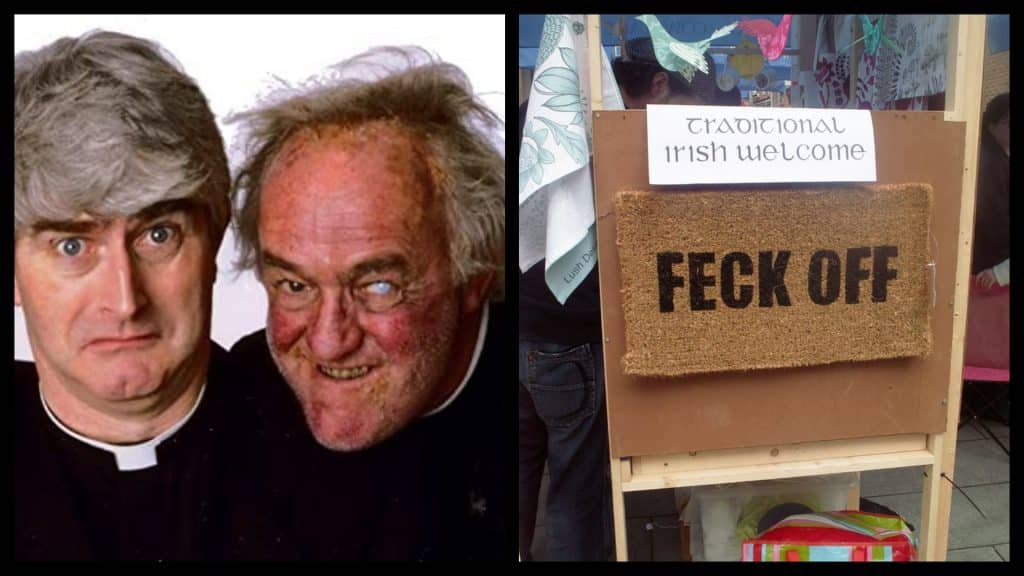
This one’s the holy grail of Irish swears. It’s like the little cousin of the F-word—less harsh, more fun, and used all the time. You’ll hear it in Father Ted and Irish sitcoms, and it’s become so beloved it’s practically family-friendly.
“Feck off!” — Said with a grin, it’s more a light push than a full shove.
- Shite
More vulgar than feck, “shite” is used as a noun, verb, and adjective. It’s as versatile as a Swiss Army knife in Irish slang. But remember, it’s still swear territory, so save it for your close mates or private rants. - Gobshite
Covered earlier, but worth repeating: an insult for someone who talks nonsense—a classic Irish verbal jab. - Bollocks
An old English swear that’s made its home in Ireland too. Often used as an exclamation of disbelief or frustration. You might hear a classic Irish mammy muttering “Ah, bollocks!” under her breath when things go wrong.
Keep up the good work, there’s plenty more knowledge the gain on the best Irish phrases and words to know for your trip to Ireland – we’re only just getting started!
- Dos and Don’ts For Visiting Ireland
- Why Do Irish People Drink? The Real Reasons Behind the Pint
- 60 Best Irish Insults to SURVIVE Your Ireland Trip
- Most Beautiful Irish Words and Their Meanings
How to Curse Someone Out in Irish (Without Getting Slapped)
Irish curses have a beauty to them that’s almost poetic. They tend to be less about outright insult and more about wishing a mild, imaginative misfortune on someone. They’re colorful and sometimes hilarious.
Here are a couple of favorite Irish curses:
- “Go n-ithe an cat thú, is go n-ithe an diabhal an cat!”
Translation: May the cat eat you, and may the devil eat the cat!
It sounds bizarre, but it’s a way of wishing a cascade of unfortunate events on someone. You say it with a smirk, and most people will laugh before they’re offended. - “Is tú mo shearc, ach níl fáilte romhat.”
Translation: You are my love, but you’re not welcome.
A perfect blend of affection and rejection, often used with a raised eyebrow. - “Mo mhuirnín thú, ach mura n-imeann tú, imeoidh m’intinn.”
You’re my sweetheart, but if you don’t leave, my sanity will.
Polite, but only just!
We’re not angry. We’re just… theatrical!
Pro tip: If you want to use Gaelic curses, make sure you get the pronunciation right—there’s nothing like mangling a Gaelic phrase to turn a witty curse into a confusing mumble.
👉 If you like these Irish curses, make sure to read similar Irish insults that will have you laughing out loud!
What Is the Most Irish Thing to Say?
Ah now — you’ll know you’re in Ireland when the fella behind the bar says something that makes no logical sense but feels completely right.
We don’t just speak English here; we Irishify it. These Irish phrases are the verbal glue of everyday life — and sometimes, a secret test to see if you’re “one of us.”
“Ah sure, it’ll be grand.”
This isn’t just an Irish phrase — it’s a lifestyle. Something went wrong? Doesn’t matter. Car break down? Grand. Deadline missed? Grand. Your house falls into the sea? Grand enough.

“The roof’s leaking again, but sure look… it’ll be grand.”
It’s not optimism exactly — it’s more like controlled surrender with a smile.
“Fair play to ya.”
This Irish insult means “good on you” — a humble way of saying, “well done, sound job,” without sounding like you’re blowing smoke. Irish people love encouragement, but we’re allergic to overpraise.
“Ran a marathon? Fair play to ya. I’d barely run for the bus.”
“Yer man” / “Yer wan”
Instead of saying someone’s name (especially if you can’t remember it), you say “yer man” for a lad and “yer wan” for a woman.
“Yer wan down the shop gave me a look like I stole her last scone.”
It’s both vague and deeply specific — very Irish!
Honourable Mentions
- “Catch yourself on!” (Northern Ireland – means stop acting the fool.)
- “I will yeah” (usually means: no, I absolutely will not.)
- “Sure look…” (The Irish conversation full stop. It ends everything without resolving anything.)
👉 We give a lot of Irish itinerary examples and Irish road trip suggestions for free (we’re sound like that!). However, if you would like a personalized Irish itinerary, check out our Travel Planning Consultation costs, and we will create the perfect trip to Ireland just for you!
What Is a Scut in Irish Slang?
Ah, the word “scut.” It sounds funny off the tongue, but it’s a real zinger when delivered with a scowl. Calling someone a scut means they’re a low-grade nuisance — cheeky, annoying, usually not worth the effort. It’s often used by older generations or country folk, and can sound fairly vicious if said right.
“That young lad’s a right little scut — hangs around the off-license annoying everyone.”
The word scut might come from the Old English scut, meaning the short tail of a rabbit or deer — implying something small, irritating, and quick to run away when called out. Not a compliment, basically.
It’s most commonly used in the North or West, and it’s definitely got that “I’m not angry, just deeply disappointed” vibe to it.
Planning a trip to Ireland? Check out our helpful guides:
- How to Visit Ireland on a Budget and the
- Irish Hidden Gems to visit for free
- 2-Week Ireland Road Trip Itinerary
- Or treat yourself to a fully customizable Ireland tour, led by a Celtic expert who can delve into the meanings behind these beautiful Irish words – and so much more. Bonus: Book now and enjoy 15% off!!
What Is the Most Used Swear Word in Ireland?
Without question: “Feck.”
This Irish swear word is everywhere — on TV, in the pub, in your nan’s vocabulary (yes, really). It’s the ultimate multi-purpose swear, beloved for being punchy but not too offensive.
- Frustrated? “Ah feck it anyway.”
- Surprised? “Feck me, that’s mad!”
- Telling someone off? “Feck off, ya gowl.”
Feck is like the duct tape of Irish profanity — it works for everything. Made famous globally by Father Ted, where the character Father Jack used it like a spiritual mantra.
“Feck! Arse! Girls!”
True story: In 1998, when Guinness ran an ad campaign using “feck off,” it got complaints in the UK… but in Ireland, people just nodded and said, “sure, that’s grand.”
Bonus: How to Insult Like an Irish Granny
Nobody — nobody — can cut you down like an Irish granny. She won’t curse. She doesn’t need to. Her weapons are passive-aggression, disappointment, and surgical-level sarcasm delivered with a sweet smile and a mug of tea.

Here are a few gems of Irish insults we’ve actually heard from our own grannies:
- “You’d lose your head if it wasn’t glued on.”
- “You’ve a face only a mother could love, and even she’s unsure.”
- “You’re not ugly, love. You’re just… unlucky.”
- “Well aren’t you fierce pleased with yourself. For what, I’m not sure.”
Granny burns are slow acting. You walk away thinking it was a compliment — then three hours later you’re staring at the wall wondering if she just compared you to a half-cooked potato.
Irish Insults in Pop Culture
Irish insults aren’t just street talk — they’ve made their way into TV, film, and comedy across the globe. And who better to deliver them than Irish characters dripping in wit and charm?
- Father Ted
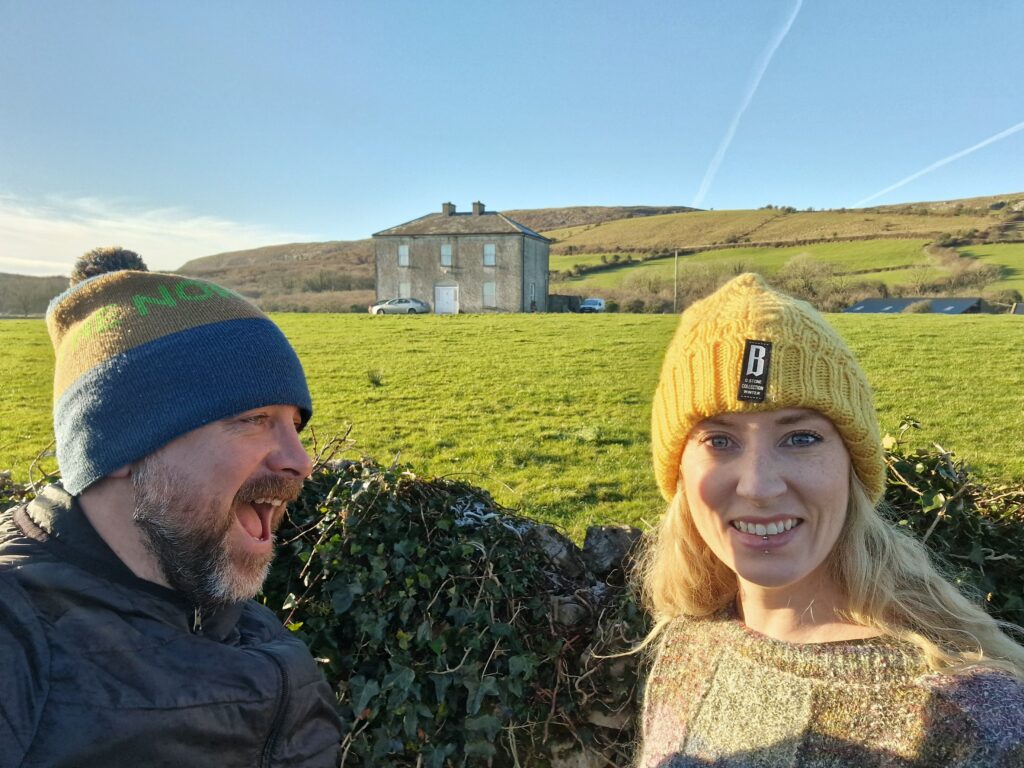
“Feck” became an international sensation thanks to Father Jack. But the whole cast perfected the art of passive-aggressive roasting.
“God, Dougal, you’re as thick as manure and only half as useful.”

- Derry Girls
Northern Ireland slang at its sharpest. Michelle alone could start a war with her mouth.
“Jesus, Mary and Joseph, and the wee donkey — what the actual f***?”

- The Young Offenders
Cork lads with too much confidence and not enough brain cells. Hilarious, sharp, and a goldmine for phrases like “pure gowl” and “ya langer.”
Funny Fact: Kevin from Happy Irish Wanderers gets compared to the short fella (Conor) from The Young Offenders all the time!
👉 To really practice these funny Irish insults, check out the best pubs in Ireland for Traditional Irish Music, and experience for yourself the true Irish culture.
Funny Irish Insults and Their Meanings: Frequently Asked Questions (with a Bit of Sass)
Q: Is “gobshite” considered offensive?
A: Ah now, it depends on who’s saying it and how. Among friends? It’s grand. In a job interview? Not so much. It’s the kind of word that says, “You’re being an idiot,” but with some charm (most of the time).
Q: Can I call someone a “gombeen” without getting slapped?
A: If you’re talking politics or business, maybe. Otherwise, it’s pretty loaded. It implies greed, selfishness, and a bit of a snake-in-the-grass vibe. Use with caution, unless you’re having a good rant at the pub.
Q: What’s the difference between “eejit” and “amadán”?
A: “Eejit” is the everyday go-to. Friendly, familiar, and used every 5 minutes in Ireland. “Amadán” is the more formal, Gaelic-powered version — usually used when your mam is properly mad at you. “You absolute amadán!” cuts deeper.
Q: Is “feck” really not offensive?
A: In Ireland? Not really. It’s on TV, in ads, and even uttered by the clergy (fictional ones, anyway). Elsewhere in the world, it might raise an eyebrow — but we just find that gas, to be honest.
Q: Can I use these insults if I’m not Irish?
A: You can — but use them like seasoning, not sauce. These words have context and tone baked in. Say them with respect and humour, not like you’re playing a leprechaun in a Halloween costume.
Irish Insults Are an Art – Don’t Waste Them
At the heart of Irish insults is something deeper than just name-calling: it’s about wit, timing, and connection. We insult the people we love more than the people we hate — because it’s a kind of social dance. It means we trust you can take it, and maybe dish it right back.
So if you’re learning these words to sound cool — grand. But if you’re learning them to understand the rhythm of Irish speech, the cheeky charm, the way we say something savage and follow it with a smile — then you’re really getting it.
Irish insults are part of a larger cultural rhythm — they demonstrate connection and creativity. Now that you know the funny Irish insults and their meanings, you’re not just learning slang — you’re learning how we talk, joke, and tell stories.
And remember: the best Irish insult is one that makes everyone laugh — even the poor fecker on the receiving end.
We love Ireland and we have lots of knowledge and information to share about our Emerald Isle. If you have questions about visiting Ireland, please do not hesitate to get in touch.
Feel free to leave a message below or contact us on our socials.
Slán go fóil
This post contains affiliate links. If you click on the links to make a purchase, we will earn a small commission. This is at NO EXTRA COST to you. This is a free way to support us and allow us to continue to create inspiring adventure travel guides.